
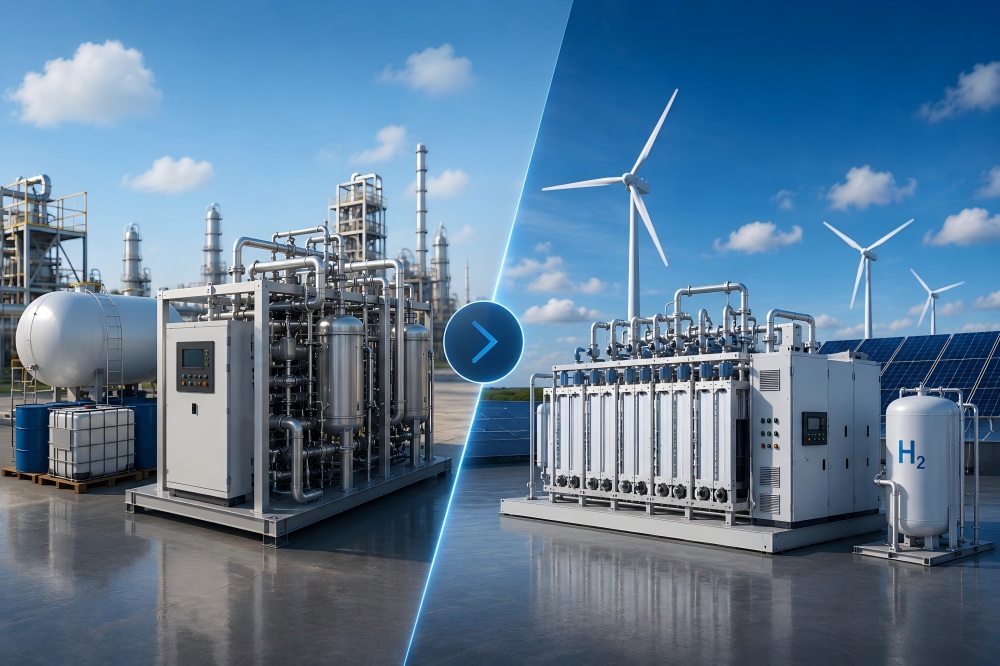
If you’re searching for a hydrogen generator for sale, you’ve likely noticed something: most results push you toward water electrolysis. PEM and alkaline systems dominate the listings. But dig deeper, and a growing number of industrial operators—especially in metal processing, glass, and chemicals—are choosing a different path: methanol reforming.
Why? Because when you compare real operating costs, not just equipment prices, methanol often delivers faster payback for typical factory volumes. HYVODA, a specialist methanol hydrogen generator manufacturer in China with over 600 installations worldwide, is one of the companies driving this shift. This article explains the economics behind the trend, so you can make an informed decision before you buy a hydrogen generator.
Before You Buy a Hydrogen Generator: Five Questions to Ask
When evaluating any hydrogen generator for sale, start with these:
- What’s the real cost per Nm³, including feedstock, electricity, and maintenance?
- How fast can it be installed and running?
- Can it operate unattended?
- What purity does my process actually need?
- Is the supplier certified, and do they have reference sites in my industry?
Electrolysis vs Methanol Reforming: A Practical Comparison
Electrolysis: The Default Option
PEM and alkaline electrolysis use electricity to split water into hydrogen and oxygen.
Advantages: Zero emissions with renewable power. Ultra-high purity from PEM.
Disadvantages: Electricity dominates the bill. At $0.07/kWh, a PEM system‘s operating cost runs $0.33–0.35/Nm³. Unless you have power below $0.04/kWh, the math is hard to justify.
Methanol Reforming: The Practical Alternative
Methanol reforming reacts methanol with water over a catalyst, then purifies hydrogen through PSA to 99.999%.
Advantages:
- Low operating cost: Feedstock costs about $0.22/Nm³ at $400/ton methanol. Electricity is negligible—just for pumps and controls.
- Compact and fast: A 100 Nm³/h unit fits in a 20-foot container. Installs in about a week. No months-long civil works.
- Unattended operation: Starts and stops automatically based on demand. Remote monitoring standard.
- CO₂ capture ready: The concentrated CO₂ stream can be purified to 5N/6N grade and sold—turning a waste stream into a second revenue line.
Real Numbers: 100 Nm³/h System, 8,000 Hours per Year
| PEM Electrolyzer | Methanol Reformer | |
|---|---|---|
| Installed CAPEX | $400,000–600,000 | $150,000–250,000 |
| Total OPEX per Nm³ | $0.33–0.35 | $0.25–0.30 |
| Annual OPEX | $264,000–280,000 | $200,000–240,000 |
| Payback vs. delivered H₂ | 18–24 months | 5–6 months |
A methanol reformer replacing delivered hydrogen at $0.80/Nm³ saves over $400,000 per year. That’s payback in under six months.
Sourcing a Hydrogen Generator from China: What to Check
Searching for a hydrogen generator China manufacturer returns hundreds of electrolyzer suppliers. Far fewer specialize in methanol reforming. Here’s what to verify:
- Certifications: ATEX, IECEx, PED, ISO 22734—these matter for local permitting and insurance.
- Reference sites: Ask for installations in your industry. Metal plants, glass factories, chemical sites—each has different requirements.
- Catalyst life: 24,000+ hours is the benchmark. Longer life means fewer replacements and lower maintenance cost.
- CO₂ capture option: Even if you don’t need it today, a system with bolt-on capture capability protects your investment.
- After-sales support: Remote diagnostics, training, and warranty terms.
HYVODA systems meet all five of these criteria, with certifications across ATEX, PED, and ISO 22734, and installations spanning 30 countries. If you’re comparing suppliers, their specifications are a useful benchmark.
Who Should Consider Methanol Reforming?
- Metal processors needing continuous 99.999% hydrogen
- Glass plants running 24/7 float lines
- Chemical plants seeking additional hydrogen capacity
- Refueling stations on grid power
- Gas distributors wanting their own hydrogen production
Ready to Buy a Hydrogen Generator?
Whether you’re actively searching for a hydrogen generator for sale or planning ahead, getting accurate numbers early saves time. Tell us your required volume, purity, and local utility rates. You’ll receive a technology recommendation and budget quote—typically within a week.