
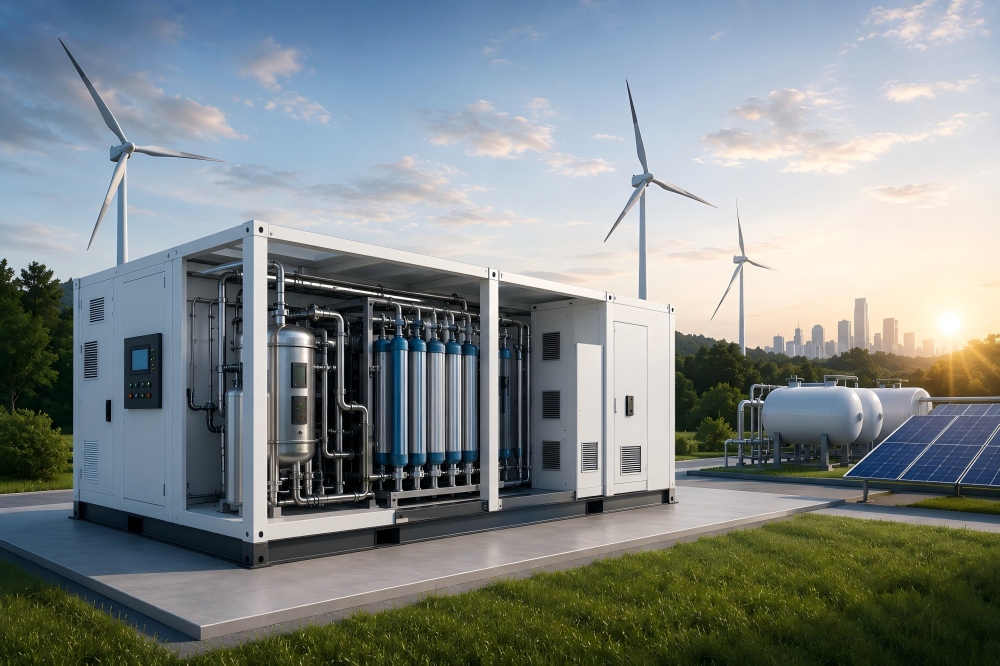
Businesses everywhere are moving away from diesel generators. A hydrogen cell generator gives you a cleaner alternative that actually works.
Unlike traditional generators that burn fuel, a hydrogen cell generator uses an electrochemical process to turn hydrogen into electricity. The only waste product is water vapor. Zero smoke. No fumes. And zero carbon emissions.
For a complete overview of our hydrogen-to-power solutions, visit: Fuel Cell Power Systems
What Exactly Is a Hydrogen Cell Generator?
A hydrogen cell generator is a power system that uses fuel cell technology to produce electricity from hydrogen. There is no combustion involved. The hydrogen reacts with oxygen inside the fuel cell stack, generating electricity and heat. Only water comes out the other end.
The numbers tell the story. The global fuel cell generator market hit approximately $0.63 billion in 2025. By 2030, projections put it at $1.80 billion. That is 23.3% annual growth. Data centers, telecom towers, construction sites, and industrial facilities are all driving this demand.
How Does a Hydrogen Cell Generator Work?
The process is simpler than you might think.
Hydrogen supply – Your system needs hydrogen. With methanol-based units, methanol serves as the hydrogen carrier. That means you do not need high‑pressure tanks or special pipelines. The methanol arrives by truck, just like diesel.
Hydrogen production – The methanol gets converted into hydrogen through a reforming process. This step happens inside the generator itself.
Power generation – The fuel cell stack converts the hydrogen into electricity through an electrochemical reaction. Fuel cells hit up to 60% efficiency. Diesel generators typically run at 30‑50%. That difference matters.
Power delivery – The electricity goes through a power conditioning system and reaches your equipment or the grid.
For a methanol‑based hydrogen cell generator, the full system path looks like this: Methanol → Water Treatment → Mixing → Hydrogen Production → Hydrogen Storage → Hydrogen Compression → Fuel Cell Power Generation → Power Distribution.
Hydrogen Cell Generator vs Diesel Generator: The Real Differences
If you are deciding between a hydrogen cell generator and a diesel unit, consider these points.
Efficiency. Fuel cells convert fuel to electricity at up to 60% efficiency. Diesel generators cap out at 30‑50%. That means a hydrogen cell generator gives you more power from the same energy input.
Emissions. A hydrogen cell generator produces only water vapor. Zero CO₂. No NOx. And no particulate matter. Diesel generators emit all of those. As carbon pricing expands and emissions rules tighten, hydrogen starts looking better every year.
Noise. Hydrogen cell generators run quietly. Diesel generators are loud. If you have ever worked near a diesel generator, you know the difference.
Maintenance. Hydrogen systems have fewer moving parts. Less oil, fewer filters, fewer breakdowns. Diesel engines need constant attention.
Cost. Hydrogen systems cost more upfront. No question. But they last longer—15‑20 years compared to 10‑15 for diesel. And their operating costs are lower.
Fuel cost. Diesel costs less per unit of energy. But hydrogen efficiency offsets some of that gap.
| Factor | Hydrogen Cell Generator | Diesel Generator |
|---|---|---|
| Efficiency | Up to 60% | 30-50% |
| Emissions | Water vapor only | CO₂, NOx, particulate matter |
| Noise | Quiet operation | High noise levels |
| Maintenance | Low | High |
| Lifespan | 15-20 years | 10-15 years |
Why Methanol Makes Sense for Hydrogen Cell Generators
Our hydrogen cell generator systems use methanol as the hydrogen carrier. This choice gives you real advantages.
Liquid fuel convenience. Methanol stays liquid at room temperature. You store it and transport it just like diesel. You get all this without high‑pressure tanks, cryogenic storage, or special permits for hydrogen pipelines.
Better economics. Studies show methanol‑based power generation costs about $0.90/kWh. Diesel runs around $1.49/kWh. That is not a small difference.
Proven technology. Methanol has emerged as a serious alternative to diesel. Production from renewable sources keeps expanding. Biomass and captured CO₂ can both feed methanol production.
Scalable design. Our systems use modular architecture. Start small and scale up as your needs grow. Small backup units or utility‑scale power plants—the same technology works for both.
Smart operation. Real‑time monitoring and remote control come standard. Continuous hydrogen leak detection, automatic emergency shutdown, and 24/7 IoT monitoring keep everything safe and reliable.
Where Do People Use Hydrogen Cell Generators?
Hydrogen cell generators show up in many applications.
Data centers. These facilities need continuous, reliable power. Downtime costs millions. Hydrogen cell generators provide clean, efficient backup power. Major tech companies are committing to carbon neutrality, and hydrogen fits their plans perfectly.
Remote and off‑grid power. Telecom towers, construction sites, mining operations, island communities—anywhere grid power is unavailable or unreliable. Hydrogen generators work quietly and produce no emissions.
Industrial backup power. Factories need backup for critical operations. Hydrogen systems start rapidly, run silently, and keep working when grid power fails.
Emergency response. Disaster relief and recovery operations need clean, quiet power. Hydrogen cell generators are increasingly deployed in these situations.
Marine applications. The U.S. Department of Energy has demonstrated 100 kW hydrogen fuel cell generators on ships. These units achieve better efficiency at part loads and reduce emissions significantly.
Distributed energy systems. Microgrids, grid integration, and distributed power all benefit from hydrogen cell generators. Modular design makes deployment flexible across different scales.
Market Growth: What the Numbers Say
The fuel cell generator market is growing fast.
| Market Metric | Value |
|---|---|
| 2025 market size | $0.63 billion |
| 2030 projected market size | $1.80 billion |
| CAGR (2025-2030) | 23.3% |
Regional leaders:
- North America leads with strong federal investment in hydrogen infrastructure.
- Europe (especially Germany, Denmark, and the Netherlands) drives growth through aggressive decarbonization policies.
- Asia Pacific – Japan leads in fuel cell commercialization while China expands hydrogen infrastructure rapidly.
Application growth:
- Stationary power generation: 20‑25% growth
- Portable power generation: 18‑23% growth
- Auxiliary power units: 16‑21% growth
Common Questions
Q: What is a hydrogen cell generator?
A hydrogen cell generator uses fuel cell technology to turn hydrogen into electricity. The electrochemical reaction produces only water as a byproduct.
Q: How does it compare to a diesel generator?
Hydrogen cell generators achieve up to 60% efficiency (diesel: 30‑50%), produce zero emissions, run quietly, and need less maintenance. They cost more upfront but last longer.
Q: Why use methanol in a hydrogen cell generator?
Methanol is liquid at room temperature, easy to store and transport, and offers energy costs around $0.90/kWh compared to diesel’s $1.49/kWh.
Q: What applications work best?
Data centers, remote power, industrial backup, emergency response, marine applications, and distributed energy systems.
Q: What safety features do you include?
Continuous hydrogen leak detection, automatic emergency shutdown, predictive maintenance, and 24/7 IoT monitoring.
Q: Can you scale to utility size?
Yes. Modular design allows scaling from small systems to utility‑scale power plants.
Q: What is the typical efficiency?
Fuel cells can reach up to 60% efficiency. Methanol‑based PEMFC systems maintain around 27% efficiency across various load conditions.
Ready to Build Your Hydrogen Power Plant?
The hydrogen cell generator market keeps growing. Clean energy demand, grid reliability concerns, and supportive policies all drive the trend. Whether you need backup power for a data center, primary power for a remote facility, or a utility‑scale plant, our modular hydrogen‑to‑power solutions meet your needs.
Our systems combine multi‑layer hydrogen safety protection, real‑time monitoring, intelligent fault detection, and remote operation. Continuous leak detection, automatic emergency shutdown, predictive maintenance, and 24/7 IoT monitoring ensure maximum safety and stable long‑term power generation.
Contact our engineering team to discuss your next hydrogen‑to‑power project.
Explore more resources: Industrial Hydrogen Generator Guide | Methanol to Hydrogen Solutions