
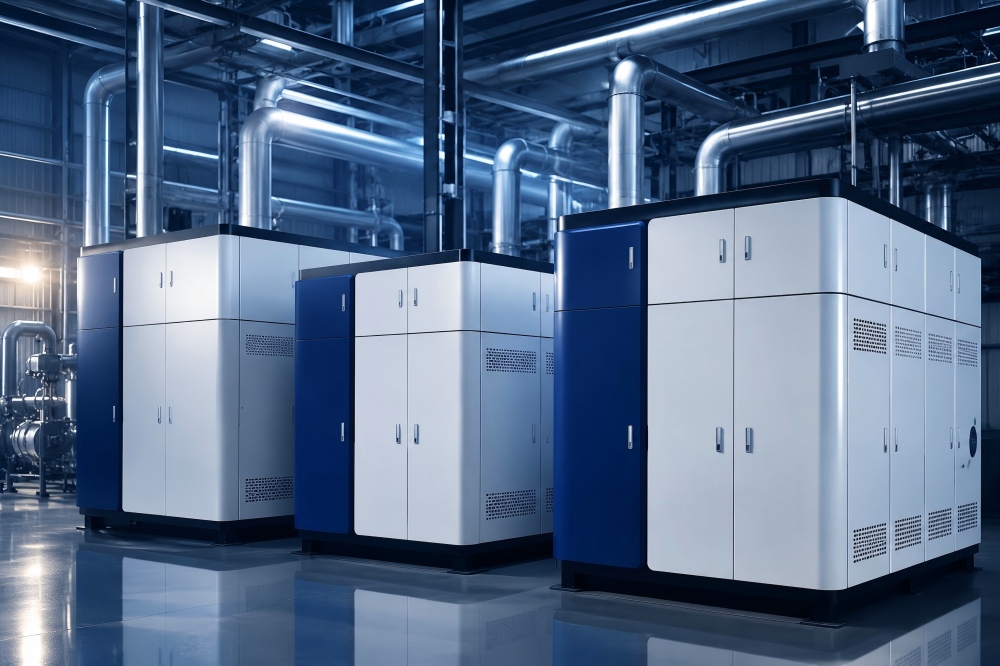
Choosing a hydrogen generation unit for your refinery is a multi‑million dollar decision. The wrong technology locks you into high operating costs and rising carbon liabilities. This guide compares steam methane reforming (SMR), electrolysis, and methanol reforming – so you can pick the right pathway based on your hydrogen demand, power price, and carbon reduction targets.
For a deeper look at methanol‑based hydrogen systems in industrial settings, see our guide: On‑Site Hydrogen Generators: Grow Your Gas Business.
What Refineries Actually Need from a Hydrogen Generation Unit
Refineries consume hydrogen mainly for hydrotreating and hydrocracking. Typical purity requirements are 99.9‑99.99% – high but not semiconductor grade. The hydrogen must also be free of catalyst poisons such as sulfur, chlorine, and arsenic. Pressure requirements vary, but most hydrotreaters operate at 30‑100 bar, so your hydrogen generation unit either supplies at that pressure or integrates a compressor train.
Refinery hydrogen units run continuously, often 8,760 hours per year. Unplanned shutdowns are extremely expensive. Reliability and on‑stream factor matter more than modest differences in electrical efficiency. And increasingly, refinery owners face carbon pricing or emission reduction mandates, so the carbon intensity of the hydrogen source has become a boardroom topic.
Pathway 1: Steam Methane Reformer (SMR) with or without CCS
Steam methane reforming has been the refinery standard for decades. Natural gas feeds a reformer furnace, producing hydrogen and CO₂. The syngas then goes through shift reactors and pressure swing adsorption to deliver 99.9% hydrogen.
When SMR still makes sense for refineries:
- Where natural gas is very cheap (e.g., US Gulf Coast, Middle East)
- Where carbon price is low or non‑existent
- When a refinery already has an existing SMR and just needs to expand capacity
The carbon tax problem that changes the math:
A 30,000 Nm³/h SMR producing 20,000 tons of hydrogen per year emits 200,000 tons of CO₂. At a carbon price of 90/ton(currentEUETS),thatis18 million per year in compliance cost – more than the natural gas feedstock itself. Carbon capture (CCS) adds 30‑50% to capital cost and reduces thermal efficiency. This math is driving refiners to seriously consider low‑carbon alternatives.
Verdict: SMR remains economically attractive only in regions with low carbon prices and cheap gas. That advantage is eroding quickly in Europe, China, and parts of North America.
Pathway 2: Electrolysis (PEM or Alkaline) for Refinery Hydrogen
Electrolysis uses electricity to split water into hydrogen and oxygen. When powered by renewable energy, it produces near‑zero carbon hydrogen.
Why electrolysis needs very cheap power to work:
A PEM electrolysis hydrogen generation unit consumes 50‑55 kWh per kg of hydrogen. At 0.07/kWh,electricityalonecosts3.5/kg – far above SMR’s total production cost. Electrolysis makes sense for a refinery only if two conditions are met:
- Very low‑cost renewable electricity (e.g., below $0.04/kWh)
- A strong incentive to reduce carbon footprint (green fuel credits or high carbon price)
A European refinery we analyzed had curtailed offshore wind at 0.035/kWh.Their50MWPEMplantproducedhydrogenatalevelisedcostof4.2/kg – which became competitive with grey hydrogen delivered at $4.5/kg after including carbon tax. Without the carbon tax, the economics would have failed. Location matters enormously.
Verdict: Electrolysis is a long‑term solution for refineries with exceptional renewable power access and strong decarbonization mandates. It is not a quick fix.
Pathway 3: Methanol‑Based Hydrogen Generation Unit
Methanol reforming reacts methanol with water over a catalyst to produce hydrogen and CO₂. The hydrogen is purified to 99.999% via PSA. The CO₂ can be captured, purified to 5N or 6N grade, and sold or sequestered.
How methanol reforming compares on CAPEX and OPEX:
| Factor | Methanol Reformer (5,000‑20,000 Nm³/h) |
|---|---|
| CAPEX (installed) | $8‑12 million (for 10,000 Nm³/h) |
| Footprint | 100‑300 m² (skid‑mounted) |
| Startup time | Minutes |
| Load‑following | Good (10‑100% ramp in minutes) |
| Typical on‑stream factor | 96‑98% |
| CO₂ capture ease | Easy (concentrated stream >95% CO₂) |
The hidden advantage: CO₂ capture as a revenue stream
Unlike SMR flue gas (dilute CO₂ at 4‑15%), a methanol reformer produces a concentrated CO₂ stream that is inexpensive to purify and liquefy. That CO₂ can be sold to food and beverage plants, welding suppliers, or used for enhanced oil recovery. In some markets, CO₂ revenue alone can offset 20‑30% of the methanol feedstock cost.
Verdict: Methanol reforming is ideal for refineries that need moderate hydrogen volumes (5,000‑20,000 Nm³/h), want a fast‑to‑deploy, low‑CAPEX solution, or want to add flexible capacity to debottleneck an existing SMR. It also offers a built‑in path to low‑carbon hydrogen without waiting for grid upgrades.
For a real‑world example of methanol‑based hydrogen in action, read our case study: How a Gas Distributor Doubled Its Hydrogen Margin.
Hydrogen Generation Unit for Refineries: Head‑to‑Head Comparison
| Factor | SMR | Electrolysis (PEM) | Methanol Reformer |
|---|---|---|---|
| Typical capacity (Nm³/h) | 10,000 – 200,000+ | 1,000 – 100,000 | 500 – 20,000 |
| Hydrogen purity | 99.9% | 99.999% | 99.999% |
| CO₂ emissions (kg/kg H₂) | 9‑11 | 0 (if renewable power) | 5‑6 (varies by methanol source) |
| CAPEX for 10,000 Nm³/h | High ($30‑50M) | Very high ($50‑80M) | Medium ($8‑12M) |
| OPEX sensitivity | Natural gas price | Electricity price | Methanol price |
| Startup time (cold to full) | Hours | Seconds | Minutes |
| Load‑following | Poor | Excellent | Good |
| Footprint | Several hectares | 0.5‑1 ha | 100‑300 m² |
| CO₂ capture ease | Difficult (dilute) | N/A | Easy (concentrated) |
| Typical project timeline | 18‑24 months | 12‑18 months | 4‑6 months |
Case Study: A Refinery That Switched from SMR to Methanol Reforming
We worked with a medium‑sized refinery in Southeast Asia that had an old, inefficient SMR. The SMR needed a major overhaul – estimated at 12million.Instead,theyinstalledtwo5,000Nm3/hmethanolreformersatatotalcostof9 million, including CO₂ capture and liquefaction.
The refinery now operates the methanol reformers during peak hydrogen demand (day shift) and shuts them down at night, when hydrogen demand drops. The SMR runs at a steady, lower rate, avoiding the inefficiency of load following. The captured CO₂ is sold to a nearby beverage plant for 200/ton,generating1.5 million in annual revenue.
The project paid back in 2.8 years. The refinery reduced its overall CO₂ footprint by 40% compared to running the old SMR alone. The client told us: “We wish we had looked at methanol reforming five years earlier.”
Common Questions About Refinery Hydrogen Generation Units
Q: Does a methanol‑based hydrogen generation unit meet refinery purity requirements?
Yes. PSA purification delivers 99.999% hydrogen. Sulfur, chlorine, and other catalyst poisons are removed to sub‑ppm levels. Our systems have been used in refineries for over five years without any catalyst contamination incidents.
Q: How fast can we install a hydrogen generation unit in an existing refinery?
Skid‑mounted units ship within 12‑16 weeks. Installation and commissioning take another 4‑6 weeks. Total time from order to hydrogen production is typically under six months, compared to 18‑24 months for a new SMR.
Q: Can a refinery add CO₂ capture to a methanol reformer later?
Yes. The capture module is designed as an add‑on. It connects to the reformer’s tail gas line and performs compression, drying, and liquefaction. Many of our refinery customers start without capture and add it later when they have a buyer for the CO₂ or when carbon pricing makes capture economic.
Q: What is the typical payback period for a refinery hydrogen generation unit?
It depends on your hydrogen demand, local methanol price, and carbon tax. For the case study above, payback was 2.8 years. For a larger refinery with higher utilization, payback can be 1‑2 years. Contact us for a free custom model.
Q: Can a methanol reformer run alongside an existing SMR?
Yes. This is actually a common setup. Use the methanol reformer as a swing unit – run it when hydrogen demand peaks or when the SMR is down for maintenance. The flexibility is valuable and costs very little to implement.
How to Choose the Right Hydrogen Generation Unit for Your Refinery
Every refinery has a unique hydrogen demand profile and energy price environment. Our team can run a pre‑feasibility study for your site, comparing SMR, electrolysis, and methanol reforming with your real numbers. We will deliver:
- A technology recommendation based on your specific hydrogen demand curve
- A preliminary CAPEX and OPEX estimate
- A CO₂ capture revenue projection (if applicable)
- A realistic payback timeline