
When a customer asks for a hydrogen generator system, they are not just buying a machine. They are buying reliability, simplicity, and a predictable cost structure. And if you are a gas distributor, you need a hydrogen generator system that fits your customers’ needs without forcing you to become a hydrogen engineer.
This guide explains what a complete hydrogen generator system looks like. You will learn why modular design matters for gas distributors. You will see how to match the right system to different customer sizes. And you will understand why buying a “system” instead of a “box” saves you time, money, and headaches.
For a full overview of how gas distributors use on‑site hydrogen, read our guide: On‑Site Hydrogen Generators: Grow Your Gas Business.
What a Complete Hydrogen Generator System Includes
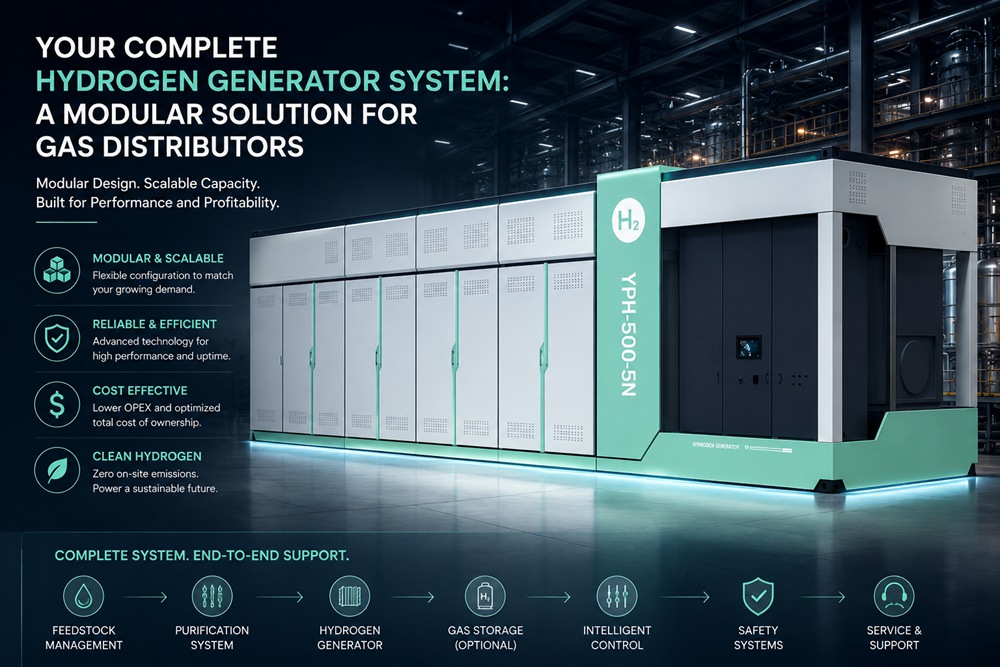
A hydrogen generator system is more than the reformer or electrolyzer you see in photos. A complete system has five core parts.
1. The hydrogen generation unit. This is the main reactor where methanol and water turn into hydrogen. In our methanol‑based systems, this includes the catalytic reactor, heat exchanger, and integrated heating system. Our OPH series, for example, uses self‑heating catalytic oxidation to reduce electrical power by over 80%.
2. Purification module. Raw hydrogen from the reactor contains CO₂ and trace impurities. Our systems use Pressure Swing Adsorption (PSA) to deliver 99.999% pure hydrogen. For customers who need even higher purity, the CPH series adds a metal membrane purification stage to reach 99.999999%.
3. CO₂ capture unit (optional but recommended). Every methanol reformer produces CO₂. Our capture module recovers over 95% of that CO₂ and purifies it to 5N or 6N grade liquid. You can sell that CO₂ to food, beverage, or welding customers. This turns a waste stream into a second revenue stream.
4. Control and automation system. A modern hydrogen generator system runs itself. Our systems include PLC‑based automation with remote monitoring. You start and stop the system from a touchscreen or your phone. Alerts go to your inbox. No dedicated operator needed.
5. Balance of plant. This includes the methanol storage tank, water treatment unit, cooling system, and safety equipment. These parts are essential but often overlooked. We provide specifications so you can source them locally or buy them as part of our package.
When you buy a hydrogen generator system from us, you get all five parts designed to work together. No guessing. No compatibility problems. Just a system that works from day one.
For details on methanol storage and handling, read our guide: Methanol Supply for On‑Site Hydrogen Generators.
Why Modular Design Matters for Gas Distributors
A modular hydrogen generator system lets you start small and grow with your customers. You do not need to predict tomorrow’s demand perfectly.
Add capacity in steps. Our smallest systems start at 15 Nm³/h (DPH series). The largest single unit goes to 500 Nm³/h (YPH and OPH series). Need more? Connect two or three units in parallel. Our modular design makes expansion simple.
Match the technology to the application. A small metal shop needs a DPH unit. A large glass plant needs a YPH or OPH unit. An electronics fab needs a CPH unit with ultra‑high purity. You can offer all of them from the same product family. Your customers get exactly what they need. You stock fewer spare parts.
Deploy faster. Modular systems come pre‑assembled on skids. You deliver them on a flatbed truck. The customer connects power, water, and methanol. Installation takes days, not months.
Move units if needed. If a customer closes a plant or changes location, you can disconnect a modular hydrogen generator system and reinstall it elsewhere. That flexibility protects your investment.
For a real‑world example of modular deployment, read our case study: How a Gas Distributor Doubled Its Hydrogen Margin.
Which Hydrogen Generator System Fits Which Customer?
Gas distributors serve many different customers. Here is a simple matching guide.
| Customer Type | Daily Hydrogen Use | Recommended System | Key Features |
|---|---|---|---|
| Small metal treatment shop | 300‑500 Nm³ | DPH series (15‑100 Nm³/h) | Compact, low cost, replaces cylinders |
| Medium glass or chemical plant | 1,000‑3,000 Nm³ | YPH series (150‑500 Nm³/h) | High purity, stable output, remote monitoring |
| Large steel mill or refinery | 3,000‑10,000+ Nm³ | OPH series (150‑500 Nm³/h, multiple units) | Self‑heating, 80% less electricity, low OPEX |
| Electronics or semiconductor fab | 100‑500 Nm³ (ultra‑pure) | CPH series (3‑15 Nm³/h) | 99.999999% purity, metal membrane |
| Any customer with CO₂ need | Any | Any series + CO₂ capture module | Adds second revenue stream |
Every system delivers 99.999% hydrogen as standard. They run unattended with no dedicated operator. And remote monitoring comes included on all of them.
The Cost Advantage of a Complete Hydrogen Generator System
A hydrogen generator system from us costs more upfront than a bare‑bones reformer. But the total cost of ownership is much lower.
Lower operating costs. Our OPH series uses self‑heating catalytic oxidation. That cuts electrical consumption by over 80% compared to electric‑heated reformers. For a 250 Nm³/h system running 8,000 hours per year, that saving alone exceeds $50,000 annually.
Longer catalyst life. Our catalysts last over 24,000 hours. That is 1.5 to 2 times longer than conventional catalysts. Fewer replacements mean lower maintenance costs and less downtime.
CO₂ revenue. The capture module adds 20‑30% to the upfront hydrogen generator system price. But it generates 150‑400pertonofCO2.Ourcasestudycustomerearnedover3 million per year from CO₂ sales. That addition pays for itself in months.
No surprise expenses. When you buy a complete system from one supplier, you avoid compatibility problems. The methanol tank fits the reformer. The controls communicate with the capture unit. The water treatment matches the purity requirements. Everything works together.
For a detailed cost breakdown, read our guide: Hydrogen Generator Price: CAPEX, OPEX and Hidden Savings.
Safety and Certifications You Can Trust
A hydrogen generator system for gas distributors must meet international safety standards. Our systems carry:
- ATEX and IECEx for explosion protection. All electrical components in hazardous areas are certified.
- PED for pressure equipment. All vessels and piping meet European pressure directives.
- ISO 22734 specifically for hydrogen generator safety and performance.
- ASME for pressure vessels (available on request).
These certifications matter when you install equipment at customer sites. Local inspectors will ask for them. Our systems have them.
For a full safety checklist, read our guide: Hydrogen Generator Safety: 7 Critical Checks Before Installation.
How Gas Distributors Use Our Hydrogen Generator System
We have helped gas distributors in over 30 countries deploy hydrogen generator systems. Here are three common use cases.
Use case 1: Replace delivered hydrogen for a single large customer.
A gas distributor in Europe installed a YPH‑250 at a glass plant. The plant previously used 100 cylinders per week. Now they have a continuous supply at lower cost. The distributor earns recurring methanol revenue and collects a monthly service fee.
Use case 2: Build a central hydrogen production station.
A distributor in Southeast Asia installed two OPH‑500 units at their own yard. They produce hydrogen 24/7 and fill their own tube trailers. They cut out their upstream supplier entirely. Their margin on hydrogen jumped from 12% to 62%.
Use case 3: Offer hydrogen as a service.
A distributor in North America leases DPH units to small metal shops. They own the equipment. The customer pays a monthly fee that includes hydrogen and maintenance. No capital outlay for the customer. Recurring revenue for the distributor.
Common Questions About Our Hydrogen Generator System
Q: How much floor space does a complete system need?
A 100 Nm³/h unit plus methanol tank and water treatment fits in about 50 square meters. Larger units scale up moderately. We provide layout drawings for each system.
Q: Can I monitor multiple systems from one dashboard?
Yes. Our remote monitoring platform aggregates data from all your installations. You see tank levels, production rates, and alerts for every system in one view.
Q: What training do my technicians need?
They need basic electrical and mechanical skills. We provide a two‑day training course at our facility. After that, your team can handle installation, startup, and routine maintenance.
Q: How long does delivery take?
Standard systems ship in 12‑16 weeks. Custom systems take longer. We can expedite certain models for urgent projects.
Q: What is the warranty?
One year on the complete system. The catalyst is covered separately based on operating hours.
Q: Do you offer service contracts?
Yes. We offer remote monitoring, scheduled maintenance, and emergency response packages. Many gas distributors include service contracts as part of their hydrogen‑as‑a‑service offering.
Ready to Offer a Complete Hydrogen Generator System to Your Customers?
Gas distributors who add on‑site hydrogen to their portfolio win in three ways. They lock in customers with long‑term methanol supply. They earn higher margins than reselling delivered gas. And they differentiate themselves from competitors who only sell cylinders.
Our hydrogen generator system is designed specifically for gas distributors. Modular. Expandable. Remote‑monitored. And backed by safety certifications you can show any inspector.
Let us discuss your market and recommend the right system size for your first installation.
Want to see real numbers from a distributor who made the switch? Read our case study: How a Gas Distributor Doubled Its Hydrogen Margin.
Need to understand methanol supply first? Read: Methanol Supply for On‑Site Hydrogen Generators.