
Introduction
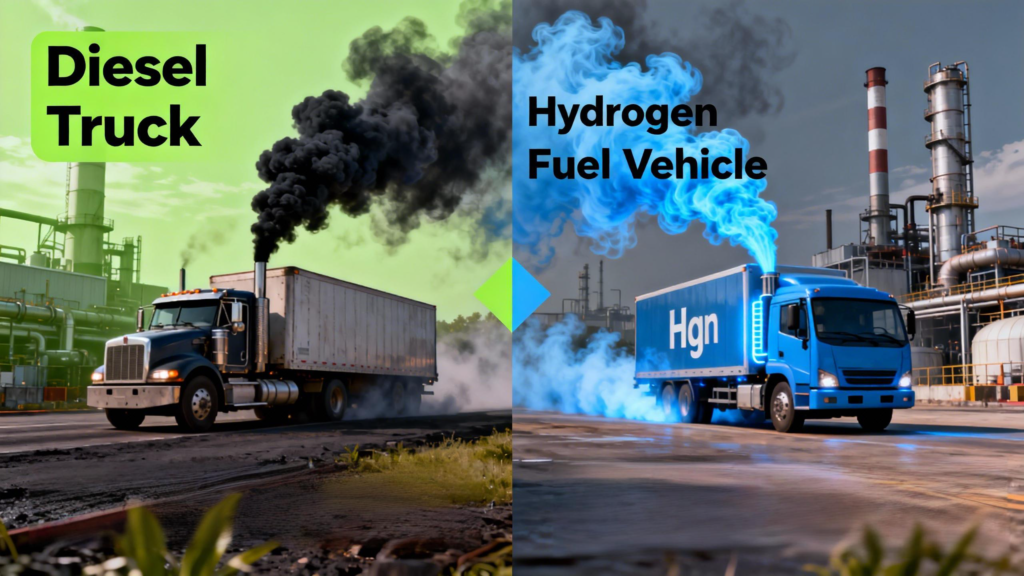
Hydrogen energy is often misunderstood as something highly technical and hard to adopt. In reality, hydrogen is a clean fuel that can power vehicles, factories, logistics, ships, backup power systems, and even homes — while producing only water vapor during use.
Hydrogen is not a futuristic concept; it is already being deployed globally and is becoming a key clean energy pillar over the next decade.
What Exactly Is Hydrogen Energy?
Hydrogen energy refers to the use of hydrogen as a fuel to produce electricity, heat or mechanical power.
Instead of burning diesel, coal or gasoline, hydrogen is used in engines or fuel cells.
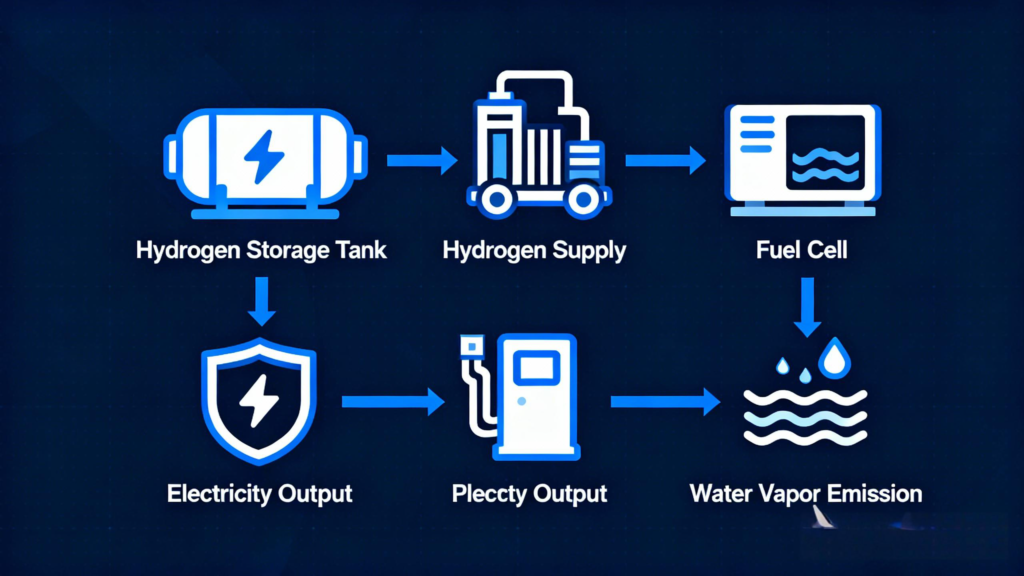
Simplified process:
- Hydrogen is stored
- Hydrogen enters an engine or fuel cell
- A chemical reaction creates electrical energy
- The by-product is water—nothing harmful
➡️ This direct and clean energy conversion is why hydrogen is receiving global attention.
Why Hydrogen Matters for the Future
Some energy demands cannot be solved by batteries alone. Hydrogen fills these gaps.
| Challenge | Why Hydrogen Helps |
|---|---|
| Slow charging time | Hydrogen refueling takes 3–5 minutes |
| Heavy-duty transport | High energy density & long driving range |
| Remote areas | On-site hydrogen avoids diesel delivery |
| Industrial heat | Can achieve high-temperature requirements |
Hydrogen does not replace batteries — it complements electrification and expands what clean energy can achieve.
Where Hydrogen Energy Is Already Being Used
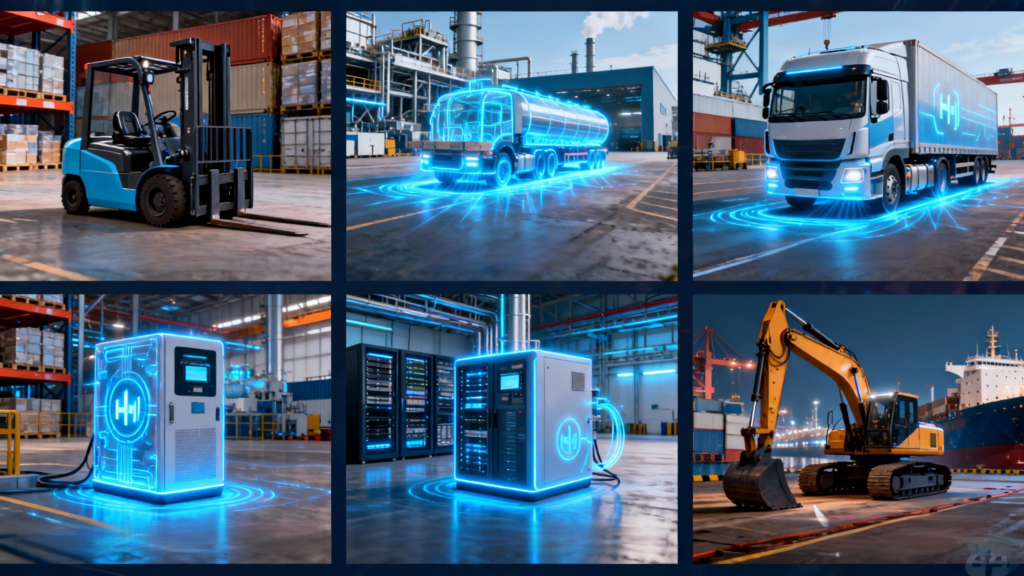
Hydrogen is already practical in today’s industry:
- Transportation fleets — trucks, buses, forklifts, port machinery
- Data centers & hospitals — backup power systems
- Steel, chemical & cement industries — high-heat hydrogen combustion
- Remote, mining, and island regions — on-site hydrogen production
These applications prove hydrogen energy is not theoretical — it is commercial and scalable today.
Key Benefits of Hydrogen Energy
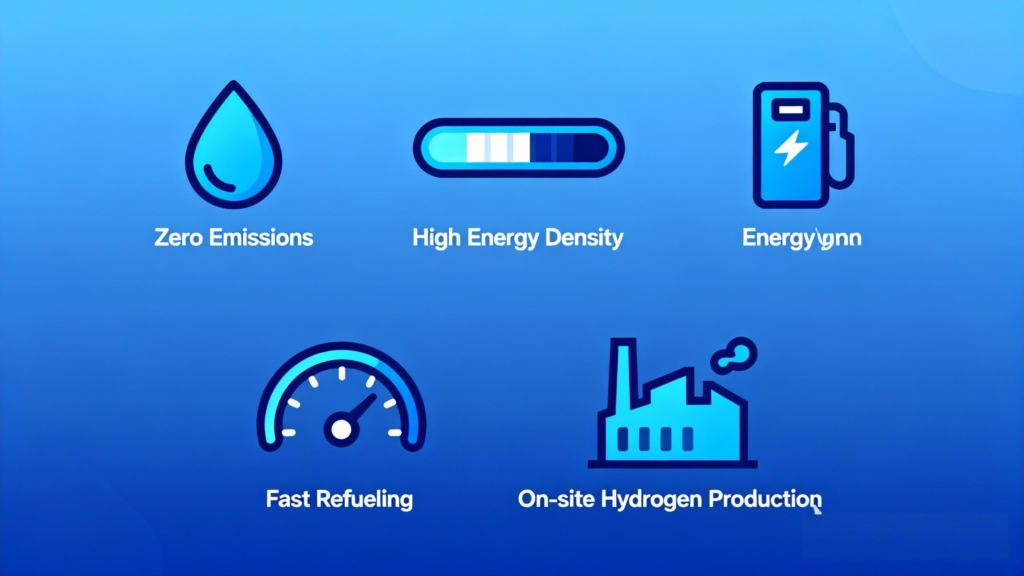
✔ Zero emissions during use
Hydrogen fuel only generates water vapor.
✔ High energy density
More energy per kilogram than batteries.
✔ Fast refueling
Refueling takes minutes, not hours — ideal for fleet operations.
✔ On-site production
Hydrogen can be generated where it is consumed, solving fuel logistics issues.
Request Technical Specifications / Get a Quote
Conclusion
Hydrogen is not just a clean fuel — it is a practical energy solution for companies requiring high efficiency, fast refueling, strong power output, and reduced emissions. As more business sectors adopt hydrogen, it is expected to play a defining role in global energy transformation.
➡ Next recommended reading: Is Hydrogen Safe? 8 Myths vs Facts You Should Know
Global Hydrogen Review 2025 — International Energy Agency (IEA)