
In the global energy transition, green hydrogen was once hailed as the “ultimate clean energy.” It was expected to drive deep decarbonization in heavy industries and redefine future industrial competitiveness. For a manufacturing powerhouse like Germany, hydrogen is not only an energy issue but also a matter of industrial transformation. Yet, the gap between ambition and reality is rapidly widening.
High Costs and Policy Uncertainty
The greatest barrier to green hydrogen remains its cost. In Europe, producing one kilogram of green hydrogen currently costs around €6, roughly twice that of hydrogen made from natural gas. By 2030, as carbon regulations tighten and capital expenditures increase, the cost could rise to €10/kg, nearly four times the price of natural gas.
Such a price level is unsustainable for energy-intensive sectors. The steel industry, which accounts for about 7% of Germany’s total emissions, is a major target for hydrogen adoption. However, as Thyssenkrupp’s CEO has noted, companies may have to switch to transitional fuels like methane instead of waiting for hydrogen costs to drop — a pragmatic decision under financial pressure.
The entire hydrogen value chain—from electrolysis equipment and renewable electricity to storage and transportation—requires massive upfront investment, further pushing up prices. This structural cost disadvantage has become the key bottleneck preventing large-scale commercialization.
Germany’s leading manufacturers are showing growing caution. In June, ArcelorMittal, Europe’s largest steel producer, abandoned plans to convert two German plants to green production, even rejecting €1.3 billion in subsidies, citing an imbalance between costs and expected returns. In July, Daimler postponed its hydrogen truck program due to slow progress in refueling infrastructure.
Policy uncertainty adds another layer of complexity. The EU’s strict definition of “green hydrogen”—requiring electricity from newly built renewable sources located in the same country and synchronized in operation—ensures environmental integrity but significantly raises production costs. German utilities argue that relaxing these rules could reduce hydrogen prices by at least €2 per kilogram.
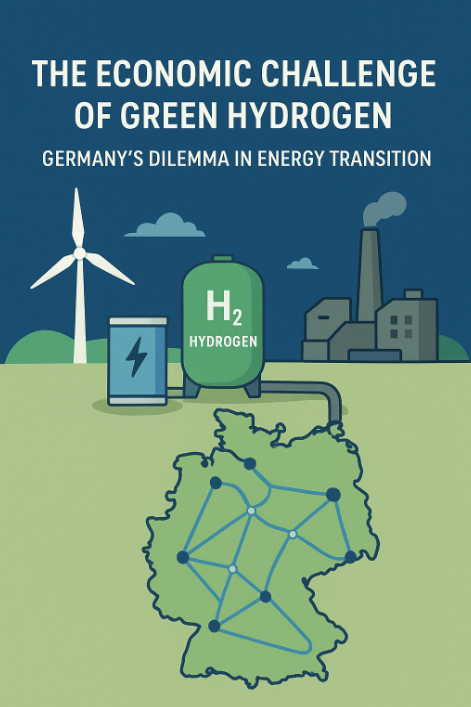
Meanwhile, Germany’s new government is sending mixed signals. Budget cuts to green hydrogen subsidies have eroded industry confidence, even as the country pushes forward with a €20 billion “hydrogen core network” spanning 9,000 km. Currently, Germany has just 0.1 GW of installed electrolysis capacity, far from its 10 GW target by 2030.
Balancing Idealism and Pragmatism
Despite current challenges, Germany’s hydrogen ambitions retain strategic importance. Decarbonizing hard-to-abate sectors such as steel, cement, and chemicals is technically impossible without hydrogen. The country has also taken early steps in international cooperation and import agreements to secure future supply.
However, investor confidence is weakening. Analysts suggest that public procurement—such as prioritizing green steel or green cement in infrastructure projects—could stimulate demand and create economies of scale. Still, experts warn that the core issue lies in high production costs, not market demand.
As one energy analyst bluntly stated, “Green hydrogen is expensive now—and it will remain expensive.”
This leaves Germany at a critical crossroads. Continuing to push for green hydrogen means accepting high costs and uncertain returns, while stepping back could risk losing leadership in Europe’s energy transition. Policymakers and industry leaders must find a realistic balance between climate ambition and industrial competitiveness.
Outlook: Finding the Right Path Forward
Germany’s hydrogen dilemma mirrors Europe’s broader energy transition struggle. To move forward, the country needs to:
- Drive technological innovation and scale effects to lower costs.
- Design balanced policies that support both decarbonization and economic resilience.
- Strengthen public-private collaboration and international partnerships to create stable market expectations.
Ultimately, the success of green hydrogen will depend on whether Germany—and Europe—can transform it from a concept into a sustainable industry.
HYVODA’s Perspective
At HYVODA, we believe that the evolution of the hydrogen industry is not just about overcoming technical barriers, but about building a sustainable and economically viable ecosystem. While the challenges facing green hydrogen are real—especially in cost and infrastructure—technological innovation and collaboration across industries will gradually unlock new opportunities.
As a company dedicated to hydrogen energy solutions, HYVODA continues to invest in efficient hydrogen generation technologies and application systems that make hydrogen more accessible for medical, industrial, and environmental use. We see the current challenges not as setbacks, but as an inevitable stage of growth in the global hydrogen economy.
The transition toward a cleaner, hydrogen-powered future will require persistence, partnership, and practical innovation—and HYVODA is committed to being part of that progress.