
Introduction
Hydrogen generator electrolysis is a proven method for producing hydrogen by splitting water with electricity. This approach supports hydrogen production water electrolysis at different scales and plays a key role in modern green hydrogen generating equipment. Because it produces hydrogen on demand and avoids fossil fuels, electrolysis has become a practical choice for laboratories, industry, and clean energy projects.
How Hydrogen Generator Electrolysis Works
Hydrogen generator electrolysis relies on a direct chemical reaction driven by electricity. When direct current passes through water, hydrogen and oxygen form at separate electrodes.
At the cathode, water molecules gain electrons and release hydrogen gas. At the anode, water molecules lose electrons and release oxygen. The overall reaction is:
2H₂O → 2H₂ + O₂
Electrolytes improve conductivity and keep the reaction stable. After separation, hydrogen passes through purification and drying steps before use. This process allows hydrogen production water electrolysis systems to operate safely and continuously.
Main Types of Hydrogen Generator Electrolysis and Efficiency
1.Electrolysis Efficiency Comparison
| Electrolysis Type | Electrolyte / Membrane | Operating Temperature | Typical Electrolysis Efficiency |
|---|---|---|---|
| Alkaline Water Electrolysis (AWE) | Liquid KOH or NaOH solution | 70–80 °C | 62% – 82% |
| PEM Water Electrolysis (PEMWE) | Solid polymer membrane (e.g. Nafion) | < 80 °C | 74% – 87% |
| Solid Oxide Electrolysis (SOEC) | Solid oxide ceramic | 700–850 °C | Up to 90%+ (theoretical) |
2.Key Characteristics by Electrolysis Type
• Alkaline Water Electrolysis (AWE)
Alkaline systems are the most established form of hydrogen generator electrolysis. They offer low equipment cost and long operating life. However, they respond slowly to power changes and perform best under steady electrical conditions.
• PEM Water Electrolysis (PEMWE)
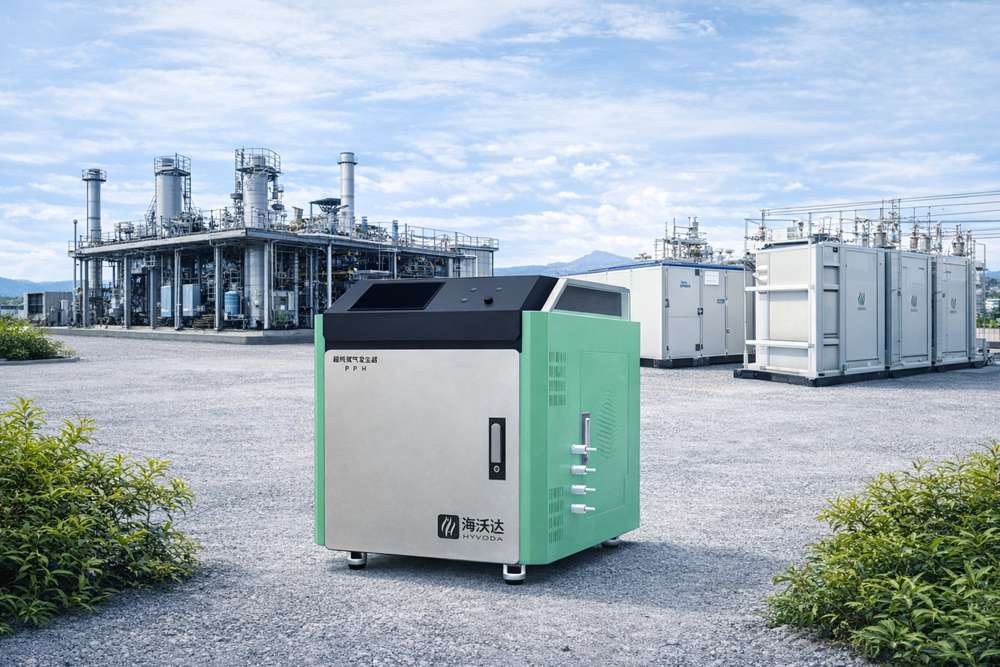
PEM systems deliver higher efficiency and faster response. They produce very high-purity hydrogen and use compact system designs. Because they rely on precious metal catalysts and advanced membranes, system cost is higher. Hyvoda’s PPH series hydrogen generators can produce ultra-pure hydrogen with a purity of up to 99.9999999%.
• Solid Oxide Electrolysis (SOEC)
SOEC systems operate at high temperatures and show the highest theoretical efficiency. They can reuse industrial waste heat, but slow startup times and material challenges limit current commercial deployment.
Advantages and Limitations of Hydrogen Production Water Electrolysis
Hydrogen production water electrolysis offers clean hydrogen without direct carbon emissions. Systems can operate close to the point of use, which reduces transport risks and cost. Electrolysis also scales well, from small on-site units to large green hydrogen generating equipment installations.
At the same time, electricity cost strongly influences operating expense. System lifetime, catalyst durability, and power stability also affect long-term performance.
Hyvoda launched a small-scale hydrogen production device. It combines the latest PEM water electrolysis hydrogen production technology with a metal membrane purification process. The device is compact and lightweight, featuring one-button start and stop, unattended operation, remote control capabilities, a silent design, and environmentally friendly characteristics.
Application Scenarios for Green Hydrogen Generating Equipment
Hydrogen generator electrolysis supports a wide range of applications:
- Industrial hydrogen supply for chemicals and electronics
- Energy storage for surplus wind and solar power
- Hydrogen refueling infrastructure
- Research and laboratory hydrogen use
- Distributed hydrogen production near end users
These applications highlight why green hydrogen generating equipment continues to expand across industries.
Technology Trends and Future Direction
Current development in hydrogen generator electrolysis focuses on improving efficiency and lowering cost. Researchers work on reducing precious metal usage, extending system lifetime, and improving dynamic response to renewable electricity. Better system integration will support larger and more reliable hydrogen production water electrolysis projects.
FAQs
What is hydrogen generator electrolysis?
It is a process that uses electricity to split water into hydrogen and oxygen for clean hydrogen production.
Which electrolysis type is most efficient today?
PEM and SOEC systems show higher efficiency, while PEM is currently the most practical for commercial use.
Is hydrogen production water electrolysis environmentally friendly?
Yes. When powered by renewable electricity, it produces green hydrogen with very low emissions.
Where is green hydrogen generating equipment commonly used?
It is used in industry, energy storage, hydrogen refueling, laboratories, and research facilities.
Build Your Electrolysis Solution with HYVODA
If you are planning a hydrogen generator electrolysis project or evaluating green hydrogen generating equipment, HYVODA provides reliable solutions designed for efficiency, purity, and stable operation. Contact our team to discuss the right electrolysis system for your application.