
Hydrogen generator power consumption is one of the first things users look at when choosing a hydrogen system. In many cases, electricity becomes the largest part of long-term operating cost. So even a small difference in energy use can change the total cost over time.
Many buyers focus on equipment price at the beginning. However, after installation, daily power consumption quickly becomes the real concern. This is especially true for laboratories, semiconductor plants, and continuous production lines where hydrogen is used every day.
Understanding hydrogen generator power consumption helps you make a better decision before investment, not after.
How Hydrogen Generator Power Consumption Is Measured
In practical applications, it is usually measured in:
kWh per Nm³ of hydrogen
This value shows how much electricity is needed to produce one cubic meter of hydrogen.
Typical ranges in the market:
- PEM hydrogen generators: 4.5–5.5 kWh/Nm³
- Alkaline systems: 4.8–6.0 kWh/Nm³
At first glance, the difference looks small. But when a system runs 8–24 hours per day, the cost gap becomes very clear over time.
Why Power Consumption Varies in Real Operation
Many users ask a simple question:
“Why does actual hydrogen generator power consumption sometimes differ from specifications?”
The answer is straightforward. Real working conditions are never ideal.
Load Fluctuation
If hydrogen demand changes frequently, some systems waste energy during adjustment. Systems that cannot respond quickly often consume more power.
Temperature and Cooling Efficiency
Poor heat management increases energy loss. Efficient cooling design helps maintain stable hydrogen generator power consumption.
Water Quality and System Condition
Low-quality water or aging components can reduce system performance. This often leads to higher energy consumption without users noticing immediately.
How to Reduce Hydrogen Generator Power Consumption
Reducing it is not only about choosing the right equipment. It also depends on system design and operation.
Choose the Right Technology
PEM systems usually perform better under variable load conditions. They can adjust output quickly and avoid unnecessary energy waste.
Optimize System Integration
A well-designed system includes:
- efficient heat exchange
- stable power supply
- proper gas flow control
These factors help reduce overall energy usage.
Use Smart Control Systems
Modern hydrogen generators use intelligent control systems. They monitor performance in real time and adjust operating parameters automatically.
This helps keep hydrogen generator power consumption at a stable level.
A New Factor: CO₂ Recovery Improves Overall Efficiency
In recent years, users are not only looking at hydrogen generator power consumption. They are also paying attention to how the system handles by-products.
For methanol-based hydrogen production, CO₂ is generated during the process. Traditionally, this CO₂ is simply released. However, this approach wastes potential value and may increase environmental pressure.
Now, advanced systems can capture, purify, and reuse CO₂.
the process includes:
- CO₂ compression
- purification (5N / 6N level)
- liquefaction and storage
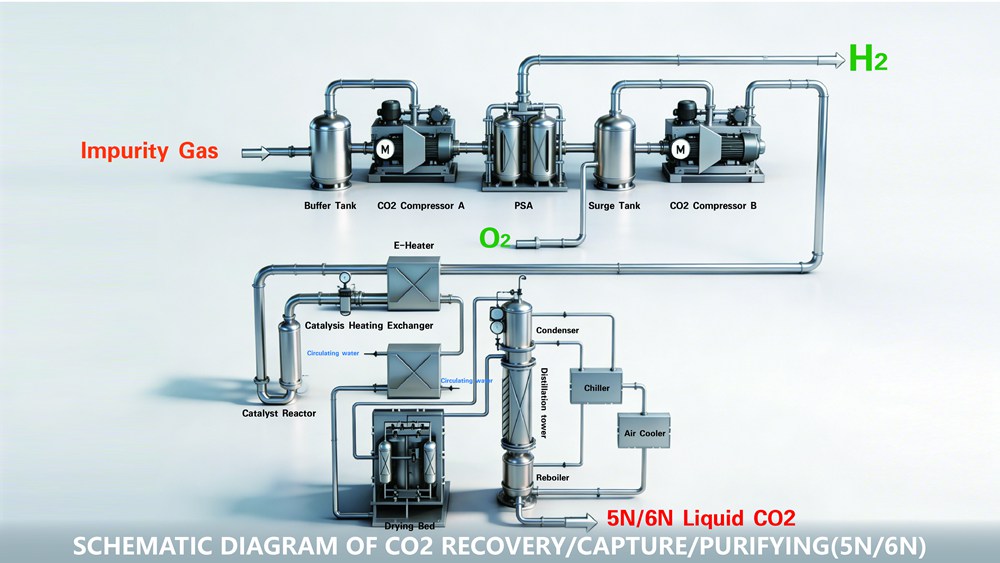
This turns waste gas into a usable resource.
You can explore more details in our CO₂ recovery and purification system.
Why CO₂ Recovery Matters for Your Project
Adding CO₂ recovery does more than improve environmental performance. It also brings practical benefits.
Lower Overall Operating Cost
Recovered CO₂ can be reused or sold, which helps offset part of the hydrogen production cost.
Better Energy Utilization
By integrating CO₂ processing with hydrogen production, the system uses energy more efficiently instead of wasting heat and gas.
Compliance with Environmental Standards
More industries now face strict carbon regulations. CO₂ recovery helps meet these requirements and improves project approval chances.
Real Cost Thinking: Power Consumption Is Only Part of the Equation
Many buyers compare systems only based on hydrogen generator power consumption. While this is important, it should not be the only factor.
A more practical evaluation includes:
- electricity cost
- maintenance cost
- system lifespan
- by-product utilization (such as CO₂ recovery)
Sometimes, a slightly higher power consumption system may still deliver better overall value if it improves system integration and resource use.
Conclusion
Hydrogen generator power consumption directly affects your long-term operating cost. Understanding how it works and how to optimize it helps you avoid unexpected expenses after installation.
At the same time, new technologies such as CO₂ recovery are changing how we evaluate hydrogen systems. Instead of focusing only on energy input, more users now look at total system efficiency and resource utilization.
If you want to compare technologies in more detail, you can also read our guide on hydrogen generator efficiency to better understand how efficiency and power consumption work together.
FAQ
1. What is typical hydrogen generator power consumption?
Usually 4.5–6.0 kWh/Nm³, depending on technology and operating conditions.
2. Why does actual power consumption differ from specifications?
Because real conditions vary, including load changes, temperature, water quality, and equipment condition.
3. Which system is more energy-efficient: PEM or alkaline?
- PEM: better for variable demand
- Alkaline: better for stable, continuous operation
4. How can I reduce power consumption?
Choose the right system, ensure good cooling and water quality, and use smart control systems.
5. Does CO₂ recovery reduce power consumption?
Not directly, but it improves overall efficiency and can reduce total operating cost.
6. Is lower power consumption always better?
No. You should also consider maintenance, lifespan, and overall system efficiency.