
PEM hydrogen generator efficiency is often discussed when comparing electrolysis technologies. Instead of focusing on general trends, this article looks at how PEM systems achieve higher efficiency through design and operation.
Understanding the technical differences between PEM and traditional systems helps users choose the right hydrogen generator for their specific applications. For many laboratories and industrial users, efficiency is not just about saving energy. It also affects system stability and long-term performance.
What Is PEM Hydrogen Generator Efficiency
W describes how effectively a PEM system converts electrical energy into hydrogen gas.
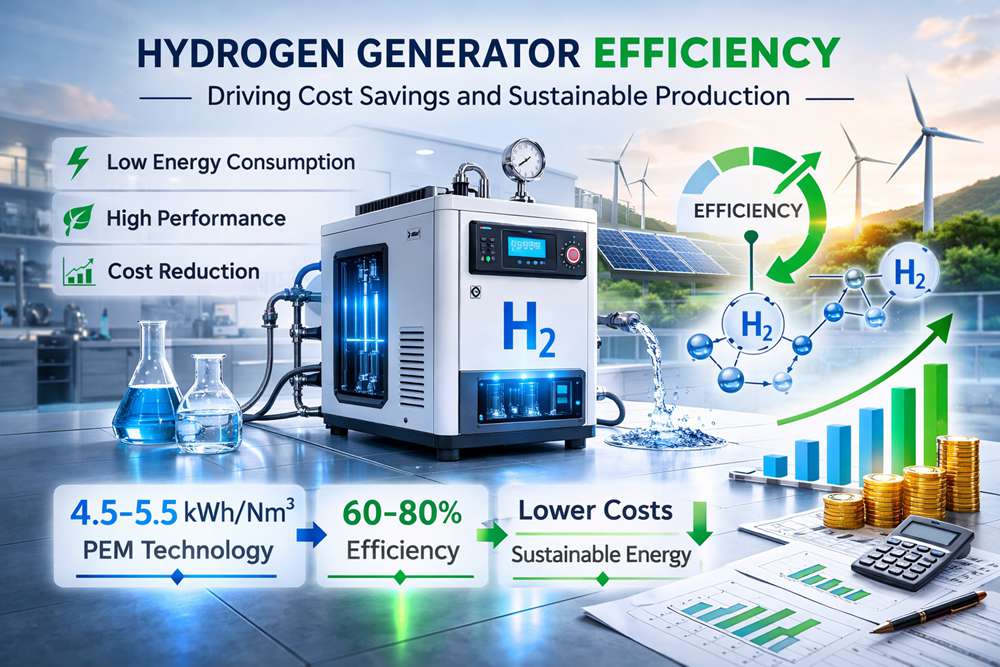
In practical use, efficiency is usually measured in kWh per Nm³ of hydrogen. A lower value means the system uses less electricity to produce the same amount of hydrogen.
Most modern PEM systems operate within the range of:
- 4.5–5.5 kWh/Nm³
This level of performance makes PEM technology a strong option for users who want stable and efficient hydrogen production.
How PEM Electrolysis Improves Hydrogen Generator Efficiency
PEM electrolysis uses a solid polymer membrane to separate hydrogen and oxygen. This structure is simple, but it brings several practical advantages in daily operation.
Stable Electrochemical Process
The membrane allows only protons to pass through. This prevents gas mixing and keeps the reaction process stable. Because of this, it remains consistent even during long running periods.
Better Performance Under Variable Load
In many real applications, hydrogen demand is not constant. PEM systems can adjust output quickly when demand changes.
This ability helps avoid unnecessary energy use and supports stable it in dynamic conditions.
Efficient Use of Electrical Energy
PEM systems can operate at higher current density without large energy losses. This improves hydrogen output while keeping energy consumption under control.
In practice, this means users can achieve better performance without increasing power input significantly.
PEM vs Alkaline: Efficiency in Real Working Conditions
When comparing electrolysis technologies, many users look at both PEM and alkaline systems.
Here is a simplified comparison:
| Technology | Energy Consumption | Practical Performance |
|---|---|---|
| PEM | 4.5–5.5 kWh/Nm³ | Stable, fast response |
| Alkaline | 4.8–6.0 kWh/Nm³ | Reliable, slower adjustment |
PEM systems usually maintain better generator efficiency when operating under changing load conditions. Alkaline systems perform well in steady environments, but may not respond as efficiently when demand fluctuates.
Why PEM Hydrogen Generator Efficiency Fits Laboratory Use
Laboratory environments often require stable, clean, and continuous hydrogen supply. PEM systems match these needs well.
Consistent Hydrogen Output
PEM systems deliver steady hydrogen flow, which is important for analytical instruments that depend on stable gas supply.
High Purity Without Complex Systems
The electrolysis process naturally produces high-purity hydrogen. This reduces the need for additional purification steps.
Compact Design for Limited Space
Most PEM hydrogen generators are compact and easy to install. They can operate quietly, which makes them suitable for laboratory environments.
Cost Benefits of PEM Hydrogen Generator Efficiency
Energy consumption is one of the main operating costs in hydrogen production. A more efficient system reduces electricity usage over time.
For users running equipment daily, even a small improvement in PEM hydrogen generator efficiency can lead to noticeable savings.
Lower energy use also helps improve overall system reliability, since the equipment operates under more stable conditions.
How to Maintain Stable PEM Hydrogen Generator Efficiency
To keep it stable, users should focus on basic system care.
Maintain Water Quality
Use high-purity deionized water. Impurities can affect the membrane and reduce efficiency over time.
Keep Operating Conditions Stable
Maintain proper temperature and pressure levels. Stable conditions support consistent hydrogen production.
Perform Regular Checks
Routine inspection of filters, sensors, and system components helps prevent performance drops and ensures long-term efficiency.
Future Development of PEM Hydrogen Generator Efficiency
PEM technology continues to improve as hydrogen demand grows. Manufacturers are working on better materials and smarter control systems.
Future systems are expected to:
- reduce energy consumption further
- improve durability
- increase automation
These improvements will make PEM hydrogen generator efficiency even more attractive for a wide range of applications.
Conclusion
PEM hydrogen generator efficiency offers a practical advantage in modern hydrogen production. It combines stable performance, efficient energy use, and flexible operation.
For users who want reliable hydrogen supply with controlled operating cost, PEM systems are a strong choice. To better understand how different technologies compare, you can also explore more about hydrogen generator efficiency and its impact on system performance.