
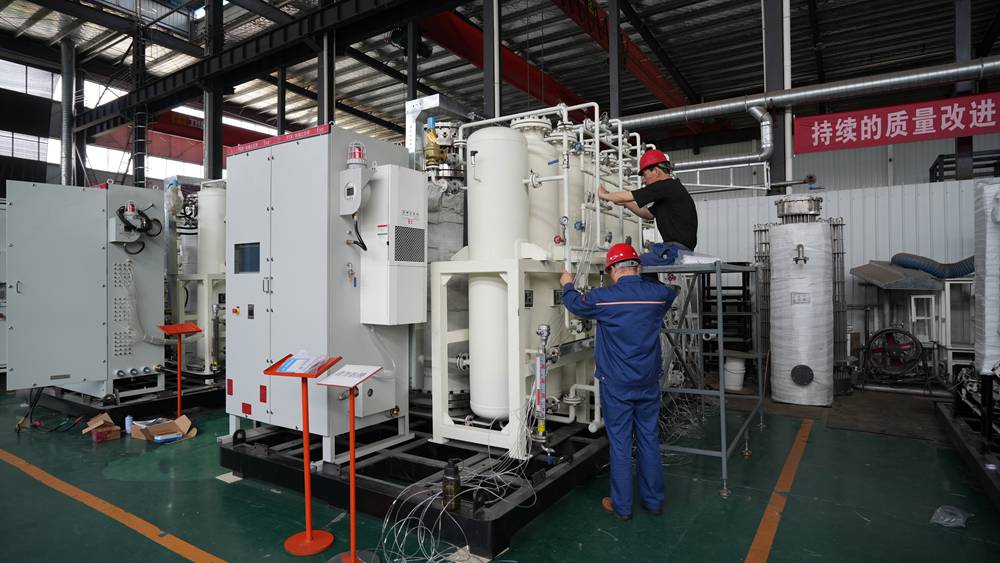
So you are thinking about building a hydrogen generation plant. That is a smart move. Many companies now realize that making their own hydrogen on-site gives them better control over both costs and supply.
But here is something you might not know. A well-designed hydrogen generation plant does not just produce hydrogen. It can also capture and purify CO2. That means you get two sellable products from a single facility. Your hydrogen goes to your process or fueling station. Your captured CO2 goes to beverage makers, welding suppliers, or electronics manufacturers. Two revenue streams. One investment.
In this guide, you will learn how a modern hydrogen generation plant works. You will see the differences between the main technologies. And you will find out how to plan a facility that creates real long-term value for your business.
What a Hydrogen Generation Plant Really Does
A hydrogen generation plant takes simple inputs like methanol and water or electricity and water and turns them into high-purity hydrogen. Many facilities today use either electrolysis or methanol reforming.
The US Department of Energy (DOE) reports that electrolysis has the potential to hit its aggressive Hydrogen Shot goal, which aims to cut clean hydrogen’s cost by 80% to $1 per kilogram. This goal matters because lower costs make hydrogen more accessible for everyone.
A modern hydrogen generation plant often integrates carbon capture technology. Instead of venting the CO2 produced during methanol reforming, the system captures it. The plant then purifies this CO2 to 99.999% (5N) or even 99.9999% (6N) purity and liquifies it. The result is a saleable product, not just a waste gas.
For a deeper look at how captured CO2 adds a second income stream, read our guide: From Waste to Value: How CO2 Capture Turns Your Generator into a Profit Center.
Main Ways to Run a Hydrogen Generation Plant
Electrolysis Plants
This technology uses electricity to split water into hydrogen and oxygen. The Siemens Energy page on hydrogen power plants suggests that running gas turbines partially or fully with hydrogen is a viable path for grid decarbonization, though the page currently focuses on using hydrogen in turbines rather than making it. Electrolysis plants are particularly good for locations with inexpensive renewable power like solar or wind.
The DOE breaks down hydrogen production into several pathways including electrolysis, and the goal is to reduce the cost of clean hydrogen by 80% over the next decade.
Methanol Reforming Plants
This is where our systems really shine. A methanol-based hydrogen generation plant reacts methanol with water over a catalyst to produce hydrogen and CO2. This approach offers three big advantages:
- It costs less to operate. Methanol currently costs less per unit of energy than electricity in most places.
- It integrates CO2 capture naturally. The CO2 stream is concentrated, so capturing it is straightforward and economical.
- It works anywhere. You only need methanol and a relatively small amount of electricity for pumps and controls. No grid upgrades required.
Hybrid and Nuclear-Powered Plants
Some of the world’s biggest hydrogen generation plant projects combine multiple energy sources. For example, thyssenkrupp nucera is designing a 260 MW plant that will use a hybrid grid drawing from solar, wind, and hydroelectric sources to ensure constant power.
There is also growing interest in nuclear-powered hydrogen production. The DOE estimates that a single 1,000‑megawatt nuclear power plant could produce up to 150,000 tons of hydrogen each year, which can be sold regionally for fertilizers, oil refining, steel production, fuel cell vehicles, or even carbon‑neutral synthetic fuels.
The Nine Mile Point nuclear plant in New York became the first US nuclear plant to produce clean hydrogen when it started generating in February 2023. That facility uses a 1 MW electrolysis system.
For most industrial users, though, a dedicated methanol-based hydrogen generation plant offers the best balance of cost, simplicity, and revenue potential.
What a Real Hydrogen Generation Plant Costs
Cost is often the deciding factor when you consider building a hydrogen generation plant. Let us look at the numbers.
For a methanol reformer producing 100 Nm3 of hydrogen per hour, here is what you can expect:
- Capital investment: roughly $150,000 to $250,000 installed
- Feedstock cost: about 55 kg of methanol per hour. At $400 per ton, that is $22 per hour
- Electricity: another $3 per hour
- Total operating cost: around $25 per hour, which gives you hydrogen at $0.25 per normal cubic meter
A comparable electrolysis plant costs more upfront:
- Capital investment: $400,000 to $600,000 installed
- Electricity consumption: approximately 500 kWh per hour. At $0.07 per kWh, that is $35 per hour
- Water and maintenance: another $5 per hour
- Total operating cost: about $40 per hour
The gap gets even wider when you factor in captured CO2 revenue. A methanol reformer produces CO2 naturally as part of the process. Capture that CO2, purify it to 5N grade, and you can sell it for roughly $150 to $400 per ton. Over a year, that can generate significant additional income.
The DOE has a goal of reducing hydrogen production costs to $1 per kilogram within the decade, which would make hydrogen extremely competitive with fossil fuels.
For a more detailed discussion of electrical costs, see our guide: Hydrogen Generator Power Consumption: What Really Impacts Your Cost.
Major Industries That Operate Their Own Hydrogen Generation Plant
More and more industries now run their own hydrogen generation plant. Here are the most common ones:
Steel and metal processing. Hydrogen is essential for annealing and direct reduction processes. Captured CO2 from the same plant can also serve as a shielding gas for welding operations.
Glass manufacturing. Float glass lines need a hydrogen atmosphere to prevent oxidation. The CO2 by product can supply dry ice production or food-grade carbonation.
Electronics and semiconductors. Chip fabs require ultra‑pure hydrogen (99.9999%+) for carrier gas and reduction. The CO2 can go to supercritical cleaning applications.
Food and beverage. Large food processors have their own hydrogen for hydrogenation. The CO2 from the plant can carbonate their own soft drinks or freeze their own products.
Chemical production. Ammonia and methanol plants need hydrogen as a feedstock. Captured CO2 can also be recycled directly into methanol or other chemical processes.
Why Pairing CO2 Capture with Your Hydrogen Generation Plant Makes So Much Sense
The most forward‑thinking hydrogen generation plant designs today include integrated CO2 capture. Here is why.
First, it eliminates regulatory risk. Carbon prices are rising in many jurisdictions. The EU Emissions Trading System currently trades between €80 and €100 per ton. Canada charges CAD 65 per ton and climbing. California’s cap‑and‑trade allowances run above $30 per ton. Capturing your CO2 reduces or eliminates these compliance costs outright.
Second, it creates a new revenue stream. The global CO2 market is large and growing. Food and beverage manufacturers need 5N CO2 for carbonation and packaging. Electronics makers need 6N CO2 for wafer cleaning. You can sell your captured gas locally instead of venting it.
Third, it supports sustainability goals. ESG reporting and carbon footprint reduction matter more every year. Being able to document that your hydrogen generation plant operates with near‑zero emissions gives you a real competitive advantage.
What to Look for When You Plan Your Own Hydrogen Generation Plant
If you are ready to move forward with a hydrogen generation plant, here is what to consider.
Start with capacity planning. Calculate your current hydrogen use. Look at your hourly peak demand and your average daily consumption. Then add a growth factor. Most operations grow 5‑10% per year, so size your plant for at least three years ahead.
Choose your technology. Methanol reforming works best for most industrial applications because of the lower operating cost and natural integration with CO2 capture. Electrolysis makes sense if you have very cheap renewable power and need the highest possible purity.
Plan for CO2 capture from day one. Adding CO2 capture later costs more. Including it from the start saves you money and creates a second revenue stream immediately.
Think modular. The best hydrogen generation plant designs today use modular, skid‑mounted components. You start with the capacity you need now. Then you add more modules as your demand grows. This approach protects your initial investment and keeps your plant scalable.
Automate everything. Modern plants run themselves. Look for systems with automated startup and shutdown, remote monitoring, and predictive maintenance alerts. You should not need a dedicated operator.
Real‑World Hydrogen Generation Plant Projects
The industry is moving fast. Large‑scale hydrogen generation plant facilities are taking shape around the world.
In Portugal, Galp completed the installation of ten electrolysis modules that will power the largest green hydrogen production unit in Europe when it starts operations later in 2026. Each of those modules can produce 10 MW of capacity.
In Egypt, a 100 MW electrolysis plant will feed renewable hydrogen to an existing ammonia facility, producing 74,000 tons of renewable ammonia annually once the final investment decision comes through in Q2 2026.
In Germany, Siemens Energy is delivering a 280 MW electrolysis system for the Emden plant, which will produce up to 26,000 tons of green hydrogen per year and is scheduled to enter operation in 2027.
And in the UK, a 1 MW low‑carbon hydrogen production plant at Tilbury will be powered by on‑site solar panels, creating a secure local supply of zero‑emission fuel for port operations.
These large projects show where the industry is heading, but you do not need a 280 MW installation to benefit. For most industrial users, a smaller, dedicated hydrogen generation plant custom‑built for your facility offers the best economics.
Common Questions About Building a Hydrogen Generation Plant
Q: How long does it take to build a hydrogen generation plant?
A methanol‑based plant typically ships in 12‑16 weeks and can be installed and running within a few weeks after delivery. Larger electrolysis plants take longer, especially if they need custom civil works.
Q: How much space do I need?
A 100 Nm3/h methanol reformer fits inside a 20‑foot container footprint. You need enough clear space for the skid, a small methanol storage tank, and a CO2 storage tank if you plan to capture the gas.
Q: What feedstock do I need?
Methanol reforming plants need commercial‑grade methanol and deionized water. Electrolysis plants need large amounts of electricity and deionized water.
Q: Can I integrate CO2 capture into an existing hydrogen generation plant?
Yes, in most cases. Our modular CO2 capture system can be retrofitted to existing methanol‑based hydrogen plants. Contact our engineering team for a site‑specific assessment.
Q: How reliable is a hydrogen generation plant?
Our methanol‑based systems have achieved 72,000 hours of trouble‑free continuous operation in industrial environments. That is more than eight years of production.
Q: What safety certifications should I look for?
Look for ATEX explosion protection, PED pressure equipment certification, and ASME compliance. These ensure your plant meets international safety standards.
Q: How long will my hydrogen generation plant last?
With regular maintenance, a well‑built plant runs for 15‑20 years. The catalyst needs replacement every 2‑3 years, but the main equipment keeps going.
Ready to Build Your Hydrogen Generation Plant?
Designing and building a hydrogen generation plant is a major decision. You need the right technology, the right capacity, and the right partner. Our team has helped dozens of industrial customers put their own plants into operation.
We will start by analyzing your current hydrogen use and your local market for CO2. Then we will design a system that fits your space, your budget, and your growth plans. Unlike most suppliers, our equipment is delivered as all‑in‑one containers that you simply connect to your methanol tank and power source.
Ready to see what a custom hydrogen generation plant could do for your operation? Contact us for a free feasibility assessment.
Want to understand the technical side of electrolysis? Read our guide: Hydrogen Generation by Electrolysis: Complete Technology Guide.