
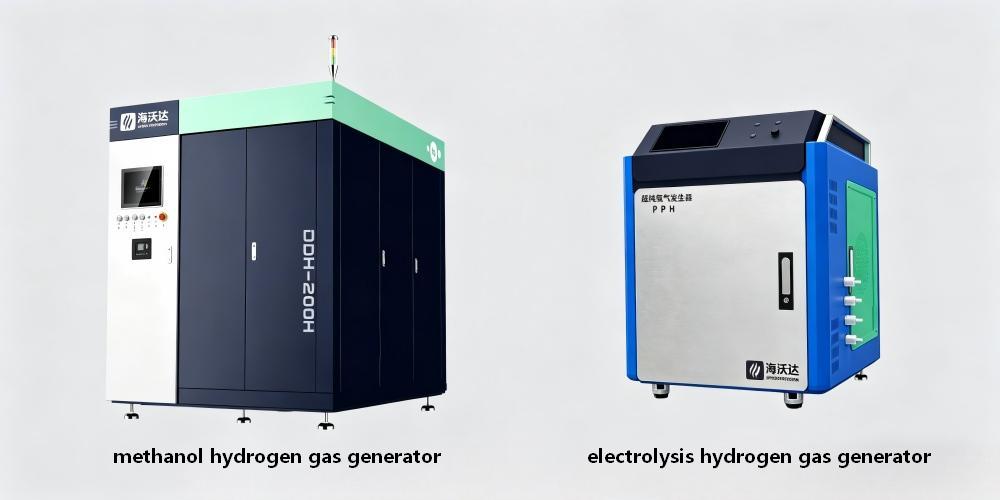
So you are thinking about getting a hydrogen gas generator for your facility. Good move. More and more companies are moving away from delivered gas and setting up their own production on-site. Why? Because a hydrogen gas generator gives you control, cuts your costs, and saves you from the headache of managing cylinders.
This guide walks you through the basics. You will find out how these machines work, which type suits your operation, and what kind of returns you can expect.
What a Hydrogen Gas Generator Actually Does
A hydrogen gas generator makes hydrogen right where you use it. No waiting for truck deliveries. No storing high-pressure cylinders. You just feed the system with either methanol and water or electricity and water, depending on the model. The machine then turns those inputs into pure hydrogen.
Most industrial hydrogen gas generators fall into two camps. Methanol-based units handle medium volumes, typically from 30 to 500 Nm3 per hour. Electrolysis units cover everything from small lab systems up to multi-megawatt installations. Your choice really depends on how much you need, what you pay for energy, and what purity your process requires.
Why Switch to an On-Site Hydrogen Gas Generator?
Companies switch to on-site hydrogen gas generators for a handful of solid reasons.
You Save 30 to 50 Percent on Hydrogen Costs
Think about what you pay for delivered hydrogen. You cover cylinder rental, delivery fees, and the supplier’s markup. An on-site hydrogen gas generator removes all those extras. You only pay for the feedstock, whether that is methanol or electricity. Most customers get their money back in two to three years.
You Never Worry About Running Out
A late delivery can shut down your production line. That costs you real money. With a hydrogen gas generator, you keep making hydrogen as long as you keep feeding it. Your process keeps running, and you stay in control.
You Control the Purity Yourself
External suppliers sometimes change their sources. Purity can vary from one batch to the next. Your own hydrogen gas generator delivers the same purity every time, up to 99.999% or higher. You set the standard, and the system meets it.
You Improve Safety Around the Facility
High-pressure hydrogen cylinders come with real risks. Storing them requires special permits and safety zones. A hydrogen gas generator makes gas at lower pressure and only when you need it. You keep less hazardous material on site, and your team handles less risk.
Methanol Reforming vs Electrolysis: Which One Fits You?
Two main technologies dominate the hydrogen gas generator market. Each one suits different situations.
Methanol-Based Hydrogen Gas Generator
This technology reacts methanol with water over a catalyst. The process creates hydrogen and CO2. A purification step then gives you 99.999% pure hydrogen.
Pick this if:
- You need 30 to 500 Nm3 per hour
- You want a compact, skid-mounted system
- You start and stop the system often
- Electricity costs are high in your area
Water Electrolysis Hydrogen Gas Generator
This technology splits water into hydrogen and oxygen using electricity. If you use renewable power, you get green hydrogen with zero carbon emissions.
Pick this if:
- You need ultra-high purity above 99.999%
- You want to scale from small to very large later
- You need green hydrogen certification
- You have access to cheap solar or wind power
How to Decide
Ask yourself these three questions before you buy a hydrogen gas generator.
| Question | Methanol | Electrolysis |
|---|---|---|
| Is my electricity cheap? | Not needed | Yes, ideally under $0.08/kWh |
| Do I need green hydrogen certification? | No (unless you use green methanol) | Yes (with renewable power) |
| What is my daily volume? | 500-8,000 Nm3/day | Any scale works |
Features That Matter in a Hydrogen Gas Generator
Not all hydrogen gas generators perform the same way. Look for these features when you shop around.
Higher Output Pressure Saves You Money
Some generators put out hydrogen at 0.8 to 1.6 MPa. Others deliver at 3.5 MPa or higher. Higher output pressure means you need less compression before you store the gas. That lowers your equipment cost and your electricity bill.
Fast Startup Helps with Renewable Power
If you plan to use solar or wind, choose a hydrogen gas generator that responds quickly. PEM electrolyzers start from cold in under five minutes. They go from zero to full load in seconds. This feature lets you capture every bit of renewable energy without wasting any.
Modular Design Lets You Grow
Your hydrogen needs may go up over time. Pick a hydrogen gas generator built from modular skids. Start with the capacity you need today. Add more modules when demand grows. This way you do not pay for capacity you do not use yet.
Automatic Operation Saves Labor
Good hydrogen gas generators run on their own. They start and stop based on demand, monitor their own performance, and send alerts when maintenance is due. You do not need a dedicated operator.
What It Really Costs to Run a Hydrogen Gas Generator
Let us look at some real numbers for a typical industrial hydrogen gas generator.
Methanol Reformer Example
A 100 Nm3/h methanol-based hydrogen gas generator costs about $150,000 to $250,000 installed. It uses 55 kg of methanol every hour. At $400 per ton of methanol, your feedstock runs $22 per hour. Electricity adds another $3 per hour. Your total hourly operating cost comes to $25. That gives you hydrogen at $0.25 per Nm3, much lower than delivered prices of $0.50 to $0.80 per Nm3.
Electrolysis Example
A 100 Nm3/h electrolysis hydrogen gas generator costs $400,000 to $600,000 installed. It uses 500 kWh of electricity per hour. At $0.07 per kWh, your power cost is $35 per hour. Water and maintenance add another $5 per hour. Your total is $40 per hour or $0.40 per Nm3. If you get renewable power at $0.04 per kWh, your cost drops to $0.25 per Nm3.
Want more detail on electricity costs? Check out our guide: Hydrogen Generator Power Consumption: What Really Impacts Your Cost.
Where People Use Hydrogen Gas Generators
Industries around the world rely on hydrogen gas generators for these jobs.
| Industry | What They Use It For | Purity Needed |
|---|---|---|
| Metal processing | Annealing, sintering, heat treating | 99.999% |
| Glass manufacturing | Float glass protective atmosphere | 99.999% |
| Electronics | Semiconductor making, LED production | 99.9999% |
| Chemicals | Hydrogenation, catalyst regeneration | 99.9% |
| Food | Vegetable oil hydrogenation | 99.99% |
| Power generation | Cooling turbine generators | 99.9% |
How to Pick the Right Size for Your Hydrogen Gas Generator
Follow these steps to figure out what capacity you really need.
Step 1: Look at your current usage
Check your cylinder delivery records or flow meters. Write down your average daily use and your peak hourly demand.
Step 2: Add room to grow
Most operations grow 5 to 10 percent each year. Size your equipment for where you will be in three years.
Step 3: Think modular
Buy about 70 percent of your peak need today. Leave space to add another unit later. This keeps you from overspending upfront.
Step 4: Match purity to your process
Do not pay for six-nines purity if three-nines does the job. Your equipment supplier should offer different purity options.
Quick Answers to Common Questions
Q: How long does it last?
Most run for 15 to 20 years with regular care. You will need to replace the catalyst or membrane every 3 to 5 years.
Q: What safety certifications should I look for?
Look for CE, ATEX for electrical areas, and PED for pressure parts. These tell you which meets international safety rules.
Q: Can I put it outside?
Yes. Most industrial units come in weatherproof, skid-mounted boxes. You do not need a special building.
Q: How much space do I need?
A 100 Nm3/h methanol reformer fits inside a 20-foot container footprint. Electrolysis units vary but usually need 30 to 50 square meters for the same capacity.
Q: Can I add CO2 capture to my existing hydrogen gas generator?
Yes. Our CO2 capture module works with most methanol-based generators. Contact us to check compatibility.
Q: How fast can I get it?
Standard units ship in 12 to 16 weeks. Custom systems take 20 to 24 weeks. We also offer faster options for urgent projects.
Ready to Find Your Hydrogen Gas Generator?
Picking the right hydrogen gas generator comes down to your volume needs, your energy costs, and your purity requirements. Methanol-based units give you the lowest operating cost for most situations. Electrolysis gives you green hydrogen and the highest purity.
Our team can help you run the numbers for your specific case. We will look at what you currently spend on hydrogen, your utility rates, and your space limits. Then we will recommend the exact hydrogen gas generator that fits your operation.
[Link to inquiry form or contact page]
Want to learn how captured CO2 adds a second income stream? Read our guide: From Waste to Value: How CO2 Capture Turns Your Generator into a Profit Center.