
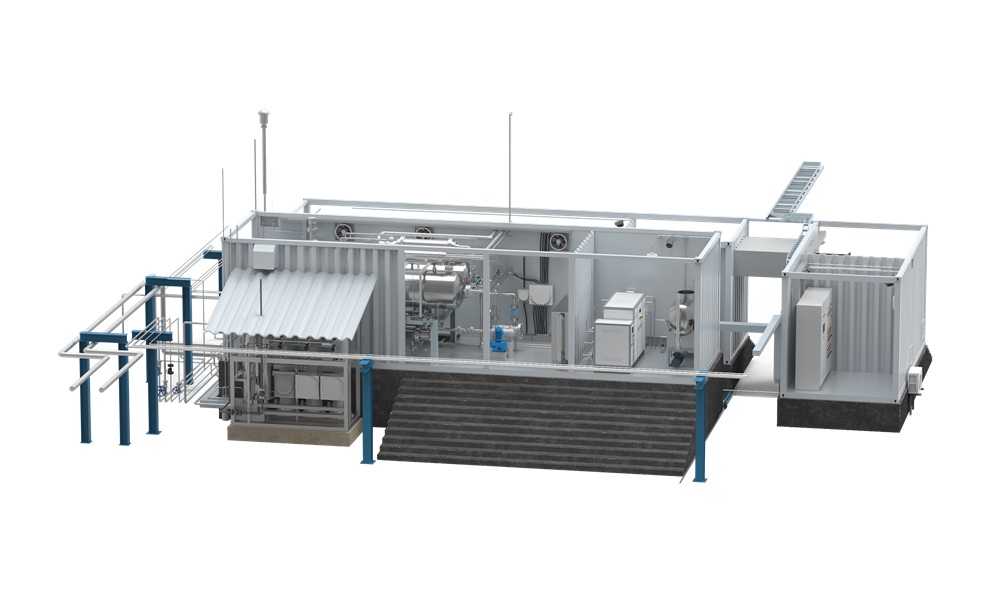
A containerized alkaline electrolyzer system gives industrial users a faster and smarter way to deploy hydrogen production. Instead of building a traditional plant with long civil construction cycles, companies can install a modular hydrogen system in just one week and start production quickly.
For renewable energy projects, hydrogen refueling stations, remote industrial sites, and distributed green hydrogen hubs, a containerized alkaline electrolyzer system reduces installation time, lowers footprint, and improves expansion flexibility.
At HYVODA, our containerized alkaline electrolyzer system combines alkaline electrolysis efficiency with a world-leading modular design, helping customers achieve faster ROI and easier global deployment.
Why a Containerized Alkaline Electrolyzer System Is Better for Modern Hydrogen Projects
Traditional hydrogen plants often require:
- foundation work
- building construction
- complex cable routing
- long installation periods
- multiple subcontractors
This slows down project launch and increases CAPEX.
A containerized alkaline electrolyzer system solves this by integrating the full hydrogen production process into standardized modules.
HYVODA integrates:
- alkaline electrolyzer stacks
- gas-liquid separation
- hydrogen purification
- control cabinet
- PLC/DCS automation
- safety ventilation
- optional nitrogen fire suppression
This allows the project team to move directly from delivery to commissioning with minimal on-site work.
1-Week Installation Greatly Improves Project ROI
One of the biggest commercial advantages of a containerized alkaline electrolyzer system is deployment speed.
HYVODA uses:
- skid-mounted process design
- aviation plug electrical interfaces
- standardized piping
- reserved maintenance access
- pre-tested control logic
As a result, installation time drops from 2 months to about 1 week.
For project owners, this means:
- earlier hydrogen production
- faster cash flow
- shorter EPC schedule
- reduced labor cost
- lower site disruption
This is especially important for energy projects with strict launch deadlines.
Compact Footprint Saves Valuable Site Space
Space cost is often underestimated in hydrogen projects.
A traditional 5 MW alkaline hydrogen plant may require:
220–250㎡
HYVODA’s system reduces this to:
~90㎡
That is more than 80% footprint reduction.
This creates major value for:
- urban hydrogen stations
- chemical plants
- logistics parks
- offshore wind support sites
- island microgrids
- mining projects
A smaller footprint also makes future expansion easier.
Built for Remote, Offshore, and Distributed Hydrogen Production
A containerized alkaline electrolyzer system is ideal for projects in difficult environments.
HYVODA systems are already suitable for:
- mountains
- islands
- desert solar farms
- offshore wind power
- remote mining sites
- temporary hydrogen stations
Because the modules can travel by:
- container ship
- standard trailer
- heavy-duty truck
- rail freight
customers can deploy hydrogen production exactly where renewable power is available.
This greatly reduces transmission losses and delivered hydrogen logistics costs.
Modular MW–GW Expansion Makes Scaling Easier
Many hydrogen projects begin with pilot capacity and expand later.
This is where HYVODA’s containerized alkaline electrolyzer system becomes especially valuable.
Our design supports:
- single modules up to 1500 Nm³/h
- matrix control for 50–500 systems
- MW–GW scale hydrogen clusters
- flexible wind + solar coupling
- staged capacity expansion
Instead of redesigning the plant, customers simply add more standardized modules.
This lowers both expansion risk and future engineering cost.
Smart Cloud Monitoring Reduces Maintenance Cost
HYVODA’s IoT big data platform makes containerized hydrogen production more reliable.
The platform supports:
- real-time operating data
- preventive fault alerts
- mobile cloud access
- multi-site matrix scheduling
- unattended operation
- 3-month predictive maintenance planning
This helps reduce maintenance cost by 50% and supports distributed hydrogen assets worldwide.
For customers managing multiple hydrogen sites, this becomes a major long-term advantage.
Why HYVODA Containerized Alkaline Electrolyzer System Outperforms Competitors
Many suppliers offer simple container packaging.
HYVODA delivers a true engineering-grade system with deeper technology advantages:
Energy Performance
Achieve 3.9–4.4 kWh/Nm³ with a stable 20–110% load range.
Unmatched Reliability
Benefit from a 10+ year stack lifetime and a 30-year system design life.
Engineering Excellence
Delivered through fluid simulation optimization, standardized modular interfaces, and fast plug-and-play commissioning.
Comprehensive Safety
Engineered to comply with ISO 22734, ASME, IEC, and NFPA, with optional heating and ventilation as well as nitrogen fire suppression support.
This makes HYVODA a stronger partner for serious industrial hydrogen investors.
Best Applications for a Containerized Alkaline Electrolyzer System
This solution is especially suitable for:
- green ammonia
- methanol plants
- hydrogen refueling stations
- wind-to-hydrogen projects
- solar hydrogen farms
- steel decarbonization
- chemical hydrogen supply
- backup distributed hydrogen production
Because deployment is fast and expansion is simple, it works well for both pilot and large industrial phases.
FAQ
1. What is a containerized alkaline electrolyzer system?
It is a modular hydrogen production solution that integrates alkaline electrolysis equipment into transportable container units.
2. How fast can it be installed?
HYVODA systems can typically be installed in about 1 week.
3. Is it suitable for offshore wind hydrogen?
Yes. It is ideal for offshore, islands, and remote renewable projects.
4. Can capacity be expanded later?
Yes. Modular units support easy MW–GW scale expansion.
5. Does containerization reduce maintenance cost?
Yes. Standardized modules and remote monitoring significantly lower O&M cost.