
Introduction: Why Storage and Transportation Are the Unsung Cornerstones of Hydrogen Adoption
When the conversation turns to hydrogen energy, the spotlight inevitably fixes on production—electrolysis efficiency, green hydrogen’s carbon footprint, or the economics of reforming technologies. Yet anyone with hands-on industrial experience knows this: the true barriers to scalable hydrogen adoption lie not in making hydrogen, but in keeping it safe, contained, and deliverable from production site to end use.
Hydrogen’s unique molecular identity—its ultra-low weight, exceptional diffusivity, and wide flammability range—sets it apart from conventional fuels in ways that demand fundamental rethinking of storage and transportation systems. A natural gas pipeline or LPG tank can’t simply be repurposed for hydrogen; every component, from valve seals to pipeline steel, must account for these intrinsic properties. Safe, cost-effective hydrogen deployment isn’t just a function of production technology—it’s a mastery of the entire downstream lifecycle: how we store it, move it, monitor it, and respond when things go wrong.
This article draws on real-world industrial lessons to unpack the best practices, regulatory guardrails, and system-level risk mitigation strategies that define successful hydrogen storage and transportation. It avoids theoretical abstractions, focusing instead on the engineering discipline and operational rigor that turn hydrogen’s unique challenges into manageable risks.
Where Is Hydrogen Safely Used in North America?
1. The Physics of Risk: Why Hydrogen Demands a Unique Engineering Approach
Before diving into solutions, we must ground ourselves in the fundamental properties that make hydrogen storage and transportation a distinct engineering challenge. Unlike natural gas or gasoline, hydrogen’s behavior at a molecular level creates risks that can’t be addressed with “one-size-fits-all” fuel infrastructure.
Consider three non-negotiable realities of hydrogen physics:
First, its extremely low molecular weight (the lightest element in the periodic table) means it can leak through microscopic gaps—seams, gaskets, or even the grain boundaries of some metals—that would contain conventional fuels. A leak that’s imperceptible for natural gas can become a significant hazard with hydrogen.
Second, its high diffusivity allows leaks to spread rapidly, mixing with air far faster than heavier gases. Unlike propane, which pools near the ground, hydrogen disperses upward but covers large volumes quickly, expanding the potential hazard zone before detection.
Third, its wide flammability range (4% to 75% in air) and ultra-low ignition energy (as little as 0.017 mJ, compared to 0.24 mJ for natural gas) mean ignition can occur in scenarios that would be harmless for other fuels—static electricity from a worker’s clothing, for example, or a small electrical spark in an unprotected area.
These properties aren’t “flaws” of hydrogen; they’re its identity. The mistake many early projects made was trying to adapt existing fuel infrastructure to hydrogen, rather than designing systems around these inherent characteristics. Successful hydrogen storage and transportation start with respecting this physics— not fighting it.

2. Storage Methods: Choosing the Right Solution for the Job, Not the Hype
Hydrogen storage isn’t a one-dimensional choice; the optimal method depends on scale, application, and risk tolerance. Industrial operators don’t select storage technologies based on theoretical potential—they choose them based on reliability, cost, and compatibility with their existing infrastructure. Below are the practical options, weighed by real-world performance.
2.1 Compressed Gaseous Hydrogen: The Workhorse of Today’s Hydrogen Economy
Compressed gaseous hydrogen (CGH2) is the most widely deployed storage method for a simple reason: it balances flexibility, maturity, and cost. It’s the backbone of mobility applications (fuel cell vehicles, forklifts) and regional industrial distribution, where infrastructure investment can’t be justified for niche technologies.
Typical pressure regimes reflect application-specific tradeoffs: 200–350 bar for stationary industrial storage (where volume is prioritized over portability) and up to 700 bar for mobility refueling (where high energy density is critical to extend vehicle range). But these pressures demand more than just “strong tanks”—they require a systems approach to safety.
Best practices honed through years of industrial use include: multi-layer pressure vessels (often with a composite outer layer for impact resistance and a metallic inner layer for gas tightness), high-integrity valve and fitting systems (where even a tiny leak can escalate quickly), redundant pressure relief devices (to prevent overpressurization in case of thermal expansion), and continuous pressure-temperature monitoring (since hydrogen’s volume changes drastically with temperature shifts).
The biggest lesson with CGH2? Long-term reliability depends on fatigue management. Pressure cycles—from refueling to use to standby—wear on vessel materials over time. Operators who skip regular fatigue testing or use substandard materials quickly learn that “saving money upfront” leads to costly failures later.
2.2 Liquid Hydrogen: High Density, High Complexity
Liquid hydrogen (LH2) offers a compelling advantage: energy density far higher than compressed gas, making it ideal for large-scale storage (industrial hubs, refineries) and long-distance transport (where volume efficiency matters). But this advantage comes with a steep complexity cost: LH2 requires temperatures of -253°C (just 20 Kelvin above absolute zero) to remain liquid.
The key challenges of LH2 aren’t just about cooling—it’s about managing the inevitable “boil-off” gas (BOG) that occurs when heat seeps into the storage tank. Even with state-of-the-art thermal insulation, small amounts of LH2 will vaporize, creating pressure buildup. Poor BOG management can lead to waste (venting hydrogen) or safety risks (overpressurization). Industrial operators often repurpose BOG for on-site power generation or re-liquefaction, turning a challenge into a resource—but this requires additional infrastructure.
LH2 is not a “one-size-fits-all” solution. It’s only cost-effective when scale justifies the infrastructure investment: think large chemical plants, aerospace applications (rocket fuel), or long-haul transport where compressed gas would require too many trips. For small to mid-scale operations, the complexity of LH2 often outweighs its density benefits.
2.3 Emerging Solid and Chemical Storage: Promise, but Not Yet Practical for Most
Solid storage (metal hydrides, carbon-based materials) and chemical carriers (ammonia, methanol) have generated buzz for their potential to reduce pressure-related risks. Metal hydrides, for example, absorb hydrogen into a solid matrix, allowing storage at near-ambient pressures. Chemical carriers bind hydrogen to other molecules, making it easier to transport as a liquid or solid.
But from an industrial risk perspective, these technologies trade one set of challenges for another. Metal hydrides require precise thermal management (absorbing and releasing hydrogen generates heat), and chemical carriers demand safe reforming processes to extract hydrogen at the point of use—adding complexity and potential hazards. Most of these solutions remain application-specific (e.g., small-scale stationary storage) or in pilot stages. For the vast majority of industrial deployments today, compressed and liquid hydrogen are the only proven, scalable options.
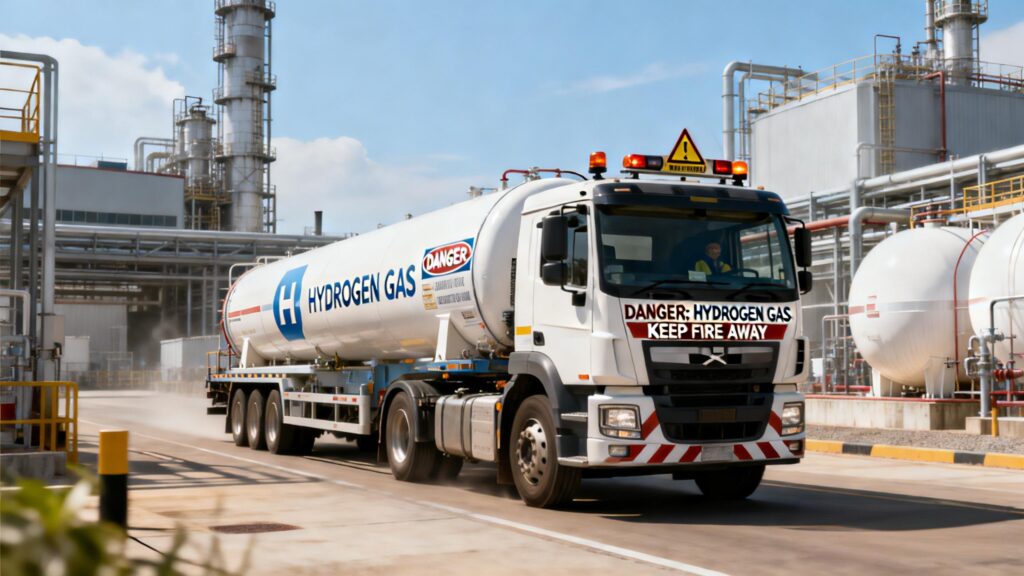
3. Transportation: Moving Hydrogen Safely Through a Chaotic World
If storage is about controlling hydrogen in a fixed location, transportation is about controlling it in motion—exposed to vibration, temperature swings, road hazards, or pipeline corrosion. Every mode of transport adds unique risk layers, and successful operators tailor their strategies to these specifics.
3.1 Road Transport: Tube Trailers and Tankers as Regional Lifelines
Road transport—via tube trailers (for compressed gas) or cryogenic tankers (for liquid hydrogen)—is the backbone of regional hydrogen distribution. It’s flexible, requires minimal fixed infrastructure, and can adapt to changing demand patterns. But it’s also exposed to the unpredictability of roads: potholes, collisions, driver error, and extreme weather.
Risk mitigation here is a mix of engineering and operational discipline. Engineering controls include shock-resistant mounting systems (to protect cylinders from vibration during transit) and reinforced valve protection (to prevent damage in case of a minor accident). Operational controls are equally critical: periodic inspection of cylinder welds and fittings (a weak joint can fail under vibration), rigorous driver training (not just on driving, but on emergency response—how to shut off valves, contain leaks, and communicate with first responders), and route risk assessment (avoiding densely populated areas during peak hours, mapping out emergency stop points).
One often-overlooked lesson from road transport operations: driver awareness is as important as equipment safety. Drivers who understand hydrogen’s behavior—how it leaks, how it ignites—are far more likely to respond effectively in a crisis than those who see the trailer as just another “tank on wheels.”
3.2 Pipeline Transport: Long-Term Efficiency, Long-Term Risks
Pipelines are the most efficient mode for large-volume, long-distance hydrogen transport—when they’re designed correctly. But hydrogen’s interaction with pipeline materials creates unique challenges that don’t exist with natural gas.
The biggest concern is hydrogen embrittlement: hydrogen molecules seep into the grain boundaries of steel, weakening the material over time and increasing the risk of cracking. This isn’t a theoretical risk—industrial operators have seen embrittlement cause pipeline failures in unmodified steel systems. Mitigation requires either using specialized alloys (e.g., austenitic stainless steel) or modifying existing pipelines (e.g., reducing pressure, adding inhibitors).
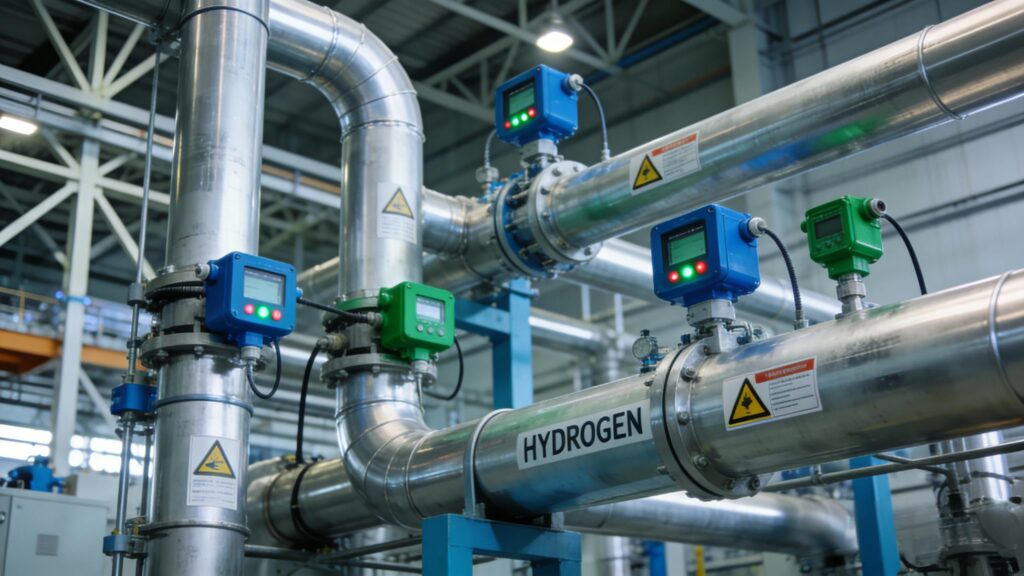
Leak detection is another critical issue. Hydrogen’s high diffusivity means leaks spread quickly, and traditional gas detection systems (designed for heavier gases) may not detect small leaks early. Pipeline operators are increasingly adopting advanced sensors (e.g., laser-based detectors) and real-time monitoring systems to address this.
Blended hydrogen-natural gas pipelines have emerged as a transitional solution, allowing operators to use existing infrastructure while gradually increasing hydrogen content. But blends are limited—high hydrogen concentrations still risk embrittlement—and pure hydrogen pipelines will be necessary for large-scale, long-term deployment. The key takeaway: pipeline transport isn’t a “set-it-and-forget-it” solution; it requires ongoing monitoring of material degradation and proactive maintenance.
4. Regulations: The Backbone of Safe Hydrogen Operations
In mature hydrogen markets, safety isn’t just a technical goal—it’s a regulatory mandate. But successful operators don’t view regulations as a burden; they see them as a framework for building reliable, sustainable systems. The best hydrogen projects don’t just comply with regulations—they use them to guide engineering decisions and operational practices.
Common regulatory elements across global markets reflect the core risks of hydrogen: pressure vessel certification (ensuring tanks can withstand operational pressures over time), hazardous area classification (defining where hydrogen leaks could create explosive atmospheres), leak detection and ventilation requirements (especially in enclosed spaces, where hydrogen can accumulate), and emergency shutdown systems (to isolate leaks quickly).
But compliance isn’t one-dimensional. The most successful projects adopt a “layered” approach: they start with international standards (e.g., ISO 14687 for hydrogen quality, ISO 19880 for storage and transport), then align with regional regulations (e.g., EU’s Hydrogen Strategy, U.S. DOT’s hazardous materials rules), and finally adapt to local enforcement requirements (e.g., municipal fire codes). This layered approach ensures that systems are safe not just on paper, but in practice—accounting for local conditions (e.g., climate, population density) that global standards may not address.
A key lesson from industry veterans: regulations evolve with technology. Early hydrogen projects often faced uncertainty because regulations hadn’t caught up to new applications (e.g., fuel cell vehicle refueling). Today, as the hydrogen economy matures, regulations are becoming more specific—but operators still need to engage with regulators proactively, sharing operational data and lessons learned to shape future standards. This collaboration ensures that regulations support innovation rather than stifling it.
5. Risk Mitigation: A System-Level Mindset, Not Just Component-Level Fixes
The biggest myth about hydrogen safety is that it can be achieved with a single “silver bullet”—a stronger tank, a better sensor, a stricter valve. In reality, effective risk mitigation requires a system-level mindset: every component, every procedure, every operator must work together to prevent, detect, and respond to hazards. Below are the three pillars of this mindset, built on decades of industrial experience.
5.1 Engineering Design: Build Safety In, Don’t Add It On
Safety should be embedded in the design phase, not retrofitted later. Industrial best practices here include:
- Conservative safety margins: Designing systems to handle pressures, temperatures, and leak rates well above expected operational conditions. For example, a compressed gas tank rated for 700 bar might be designed to withstand 1,050 bar (a 50% safety margin) to account for thermal expansion or pressure spikes.
- Fail-safe valve configurations: Valves that automatically close in the event of a power failure or pressure spike, preventing uncontrolled leaks.
- Redundant sealing systems: Multiple layers of seals (e.g., gaskets, O-rings) in critical joints, so a failure in one layer doesn’t lead to a catastrophic leak.
The most successful design teams don’t just ask “What if this component fails?”—they ask “What if multiple components fail at the same time?” This worst-case scenario thinking drives robust, resilient systems.
5.2 Operations: Discipline Is as Important as Design
A perfectly designed system will fail if operations are sloppy. Operational controls that mitigate risk include:
- Standard Operating Procedures (SOPs) that leave no room for ambiguity: Step-by-step guides for refueling, storage, maintenance, and emergency response. SOPs aren’t just “paperwork”—they’re living documents that are updated with every near-miss or failure.
- Regular inspection and maintenance schedules: Proactive checks for wear, corrosion, or fatigue. For example, compressed gas tanks are inspected for dents or weld cracks every few years, and valves are tested for leaks monthly.
- Operator training and certification: Not just on how to use equipment, but on how to understand hydrogen’s behavior. Operators should be able to recognize the signs of a leak (e.g., hissing sounds, frost formation from rapid expansion) and respond quickly.
One of the most valuable lessons from industrial operations: near-misses are gold. Every time a leak is caught early, or a procedure is misfollowed without incident, the team should debrief and update processes. This continuous improvement cycle turns operational experience into safer systems.
5.3 Monitoring: Detect Early, Respond Fast
The best way to mitigate a hydrogen hazard is to detect it before it escalates. Monitoring systems that work in practice include:
- Hydrogen sensors in enclosed spaces: Sensors that trigger alarms when hydrogen concentrations reach 1–2% (well below the 4% lower flammability limit). In critical areas, sensors are linked to automated ventilation systems.
- Real-time pressure and flow monitoring: Systems that track pressure in tanks and flow in pipelines, alerting operators to abnormal changes (e.g., a sudden pressure drop that indicates a leak).
- Automated shutdown logic: Systems that isolate the hydrogen source (e.g., close a valve) if a leak or overpressure is detected, even if no operator is present.
From practical experience, early detection and rapid isolation are far more effective than relying solely on the strength of containment. A small leak caught in the first minute can be fixed with minimal disruption; a leak that goes undetected for 10 minutes can escalate into an explosion.
6. Industry Insight: Safety Is a Strategic Investment, Not a Cost
In the rush to scale hydrogen projects, some companies view safety as a “cost center”—a necessary expense to check regulatory boxes. But industrial veterans know better: safety is a strategic investment that drives long-term success.
Consider the impact of safety on key business metrics:
- Equipment lifespan: Well-maintained, safety-focused systems last longer. A compressed gas tank that’s inspected regularly and operated within safe limits can last 20 years; one that’s neglected may fail in 5.
- Insurance and compliance costs: Companies with strong safety records pay lower insurance premiums and avoid costly fines for regulatory violations. A single safety incident can double insurance costs overnight.
- Workforce safety culture: Employees who feel safe are more productive and engaged. High turnover due to safety concerns costs companies far more than investing in training and equipment.
- Project scalability: A project with a proven safety record is easier to expand. Investors and regulators are more likely to support scaling if they see a history of reliable, safe operations.
The most successful hydrogen companies don’t treat storage and transportation as “containers for hydrogen”—they treat them as integrated engineering systems that connect production to end use. They invest in safety not just to comply with rules, but to build trust with employees, investors, and communities. Trust, in turn, is the foundation of a scalable hydrogen economy.
Conclusion: Engineering Discipline Builds the Hydrogen Economy’s Future
Hydrogen storage and transportation are not barriers to adoption—they are tests of engineering maturity. The hydrogen economy won’t be built on hype about production technologies; it will be built on the quiet, consistent work of designing, operating, and maintaining safe storage and transportation systems.
By respecting hydrogen’s unique physics, adopting a system-level approach to risk mitigation, and embracing regulatory discipline, we can turn hydrogen’s challenges into strengths. Every safe storage tank, every reliable pipeline, every well-trained operator builds trust in hydrogen as a viable energy carrier.
As the hydrogen economy expands, the projects that succeed long-term won’t be the ones with the most innovative production methods—they’ll be the ones with the most rigorous engineering discipline in storage and transportation. That’s the unsung truth of hydrogen energy: its future depends not on how we make it, but on how we handle it.